
Bespoke jewellery display cases and counters
Bespoke jewellery display cases and counters
A piece of jewellery first has to catch someone’s eye from the pavement. At the counter, the same customer wants to see how the stone is set and try the ring on. Those two moments call for different displays. We can help you plan window showcases, consultation counters and wall cases around the way you sell jewellery and watches.
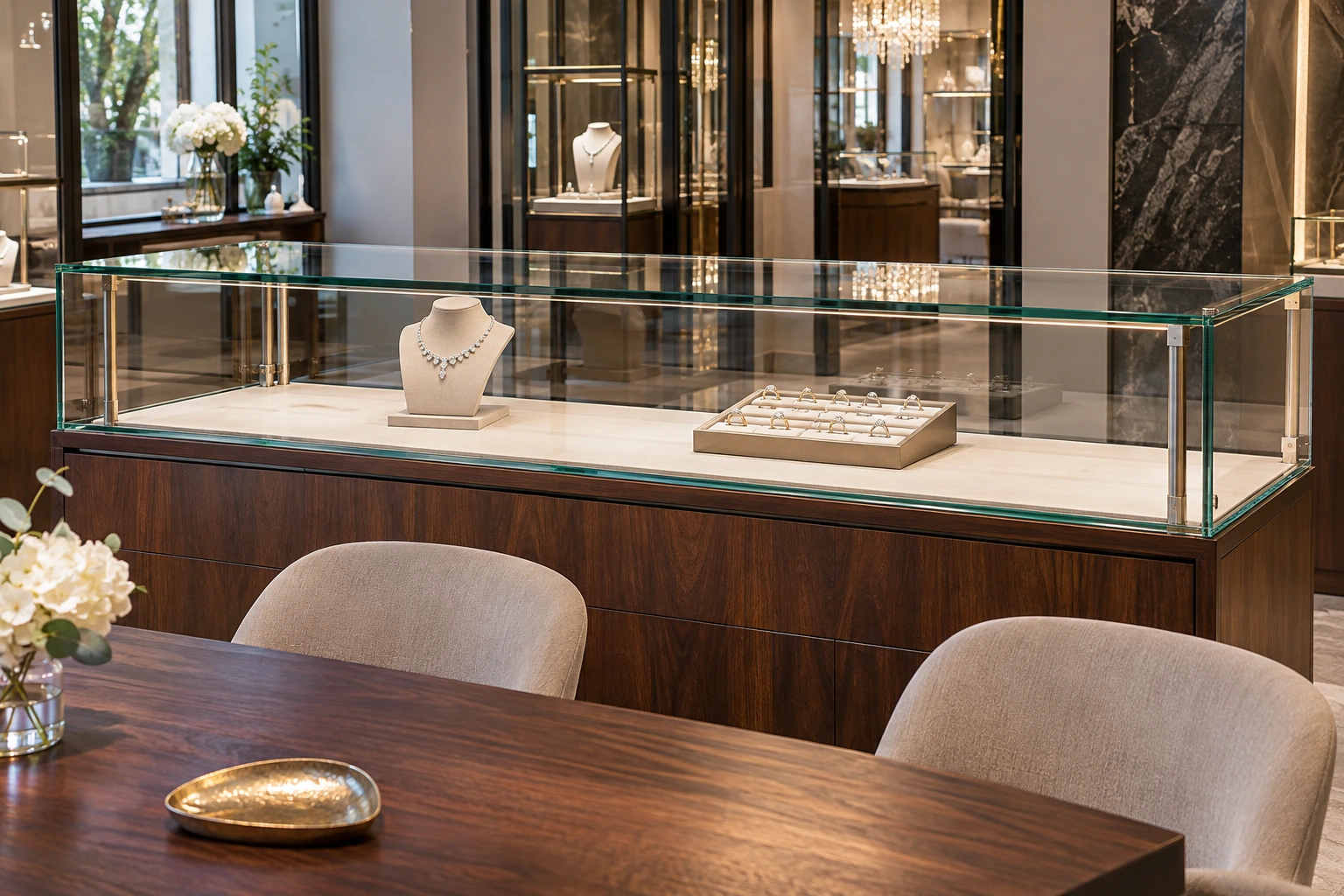
Models from the DREIECK DESIGN collection
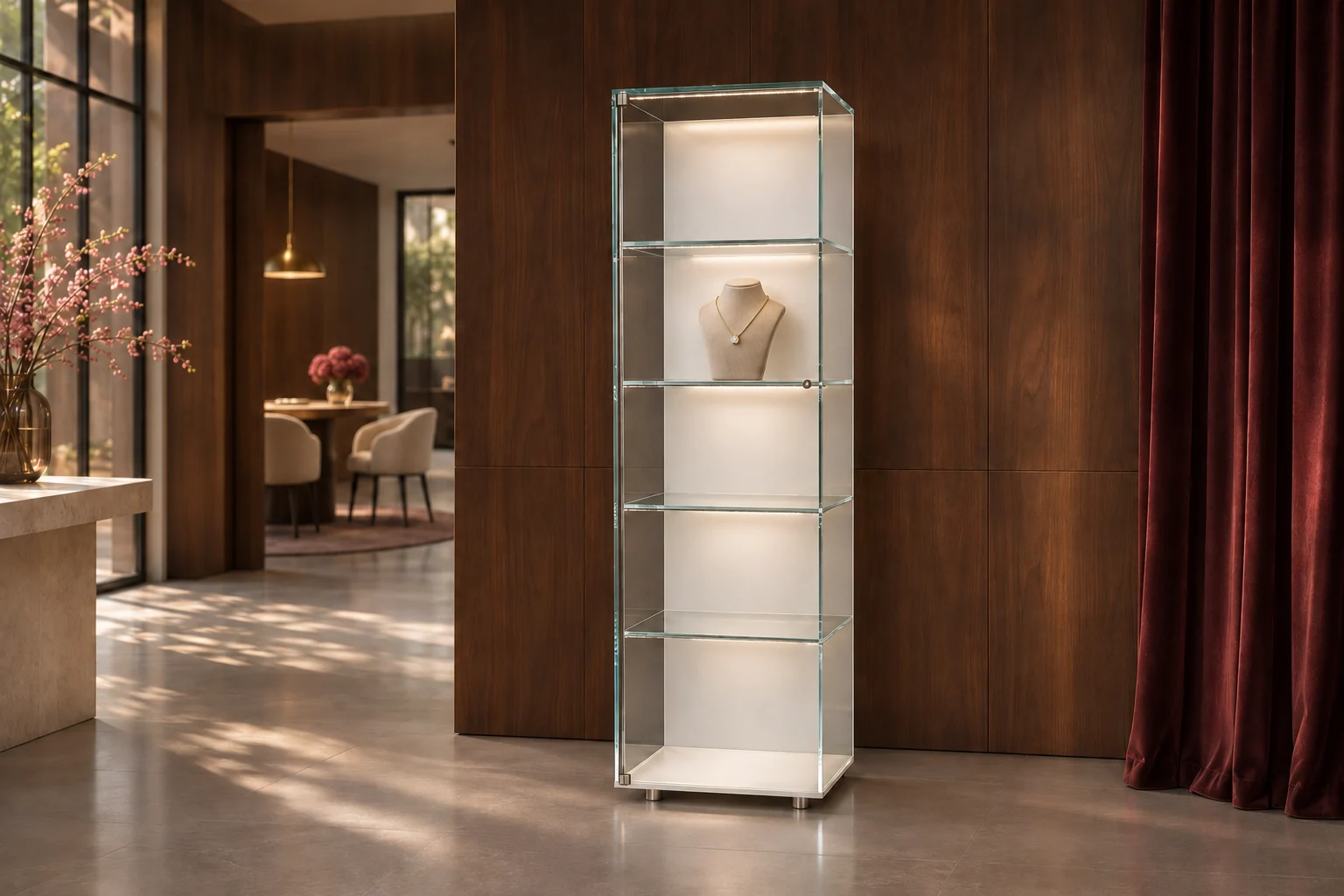
The SOLUS LED LINE cabinet can present a small jewellery selection in a consultation area. Include any burglary-resistance requirements specified by your insurer in the project enquiry.
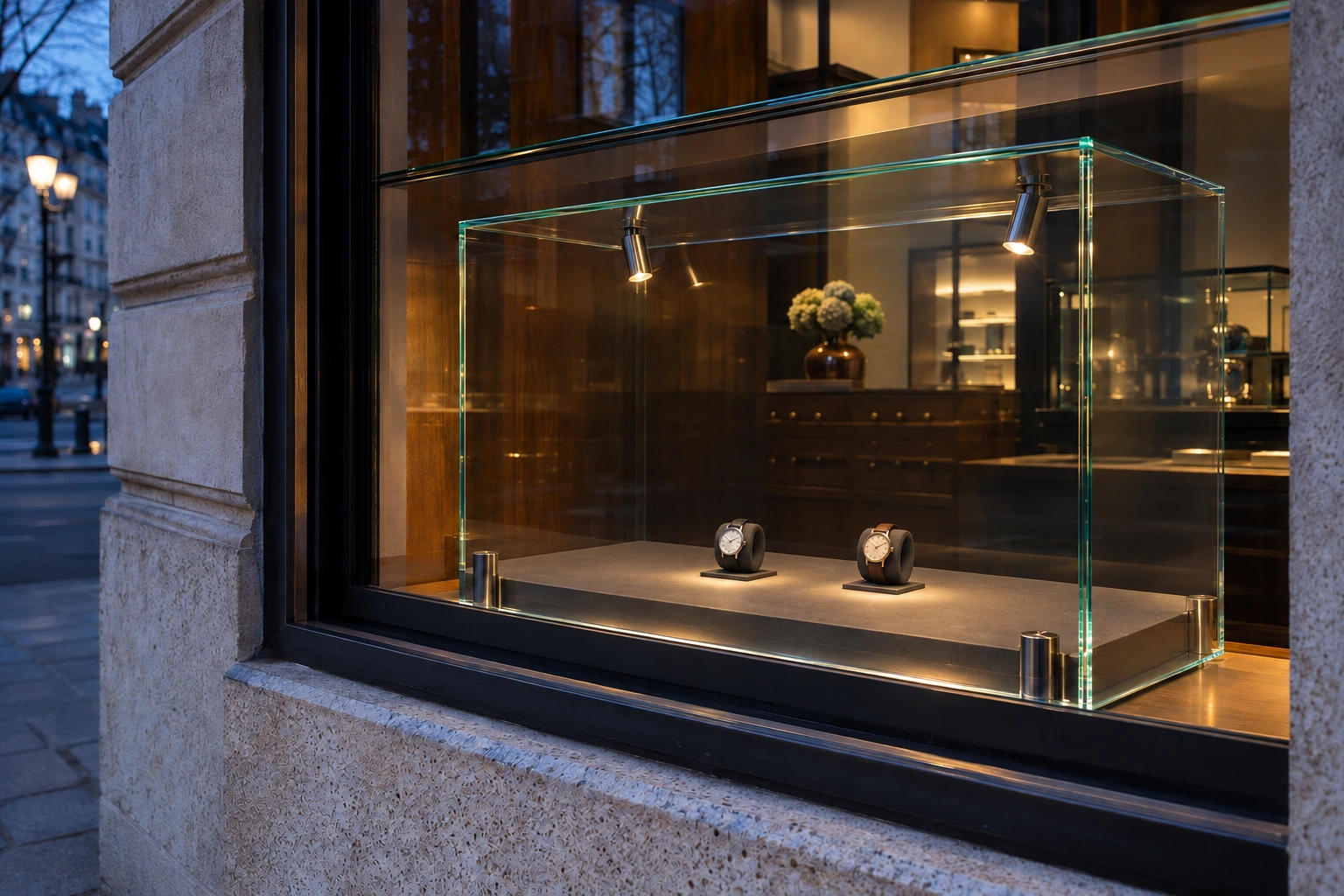
A window display seen from the street
Look at the window from across the street, then at arm’s length. An individual necklace benefits from space around it. In a row of watches, customers should still be able to read the dials when standing slightly to one side. Work out the case depth from your display stands, the viewing angle and the space staff need behind them.
In daylight, the building opposite can appear as a reflection directly over a dark watch face. Anti-reflective glass can help reduce this. Try a sample with pieces from your own collection in the shop window, both in daylight and with the evening lights on.
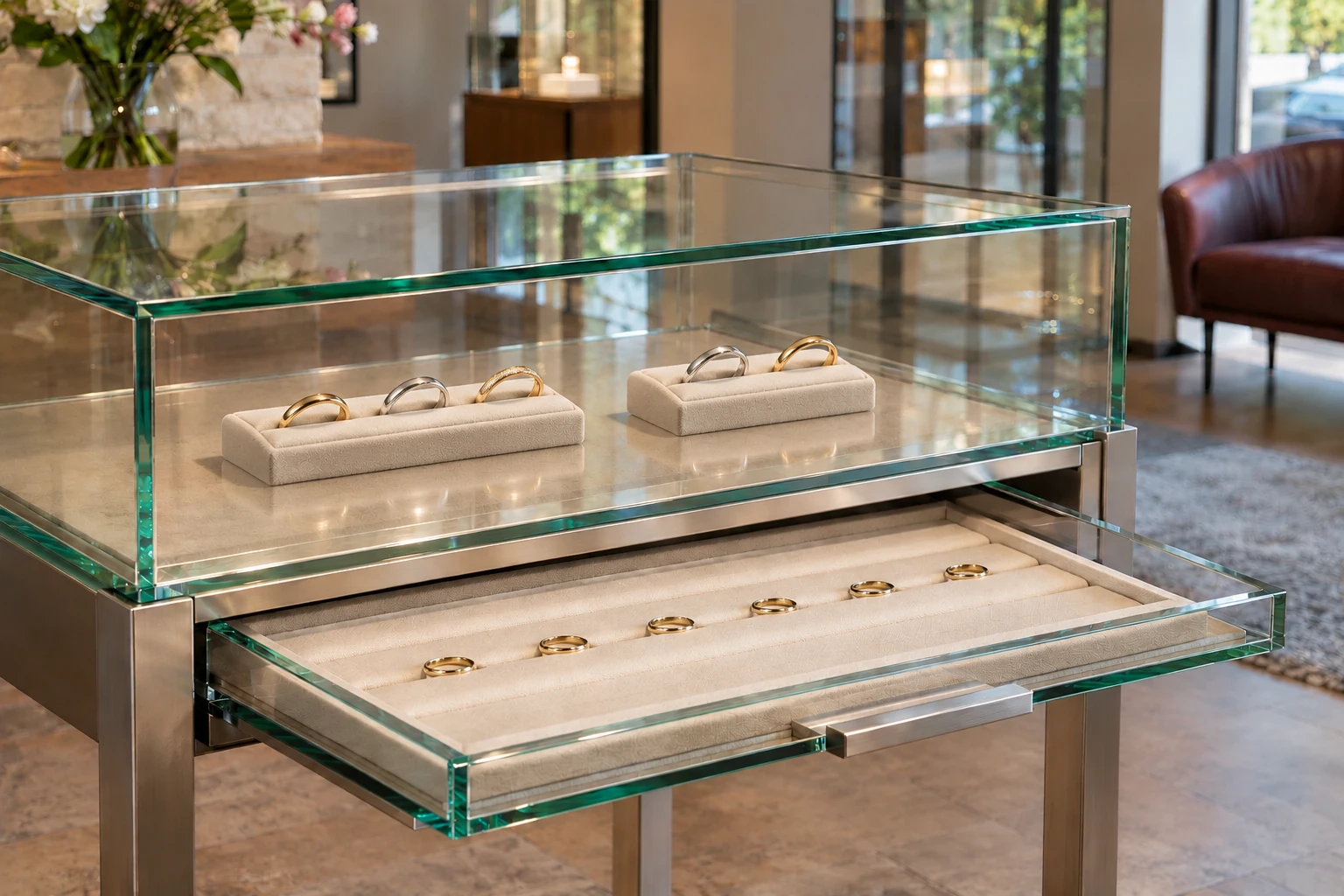
A wedding ring counter that works for a fitting
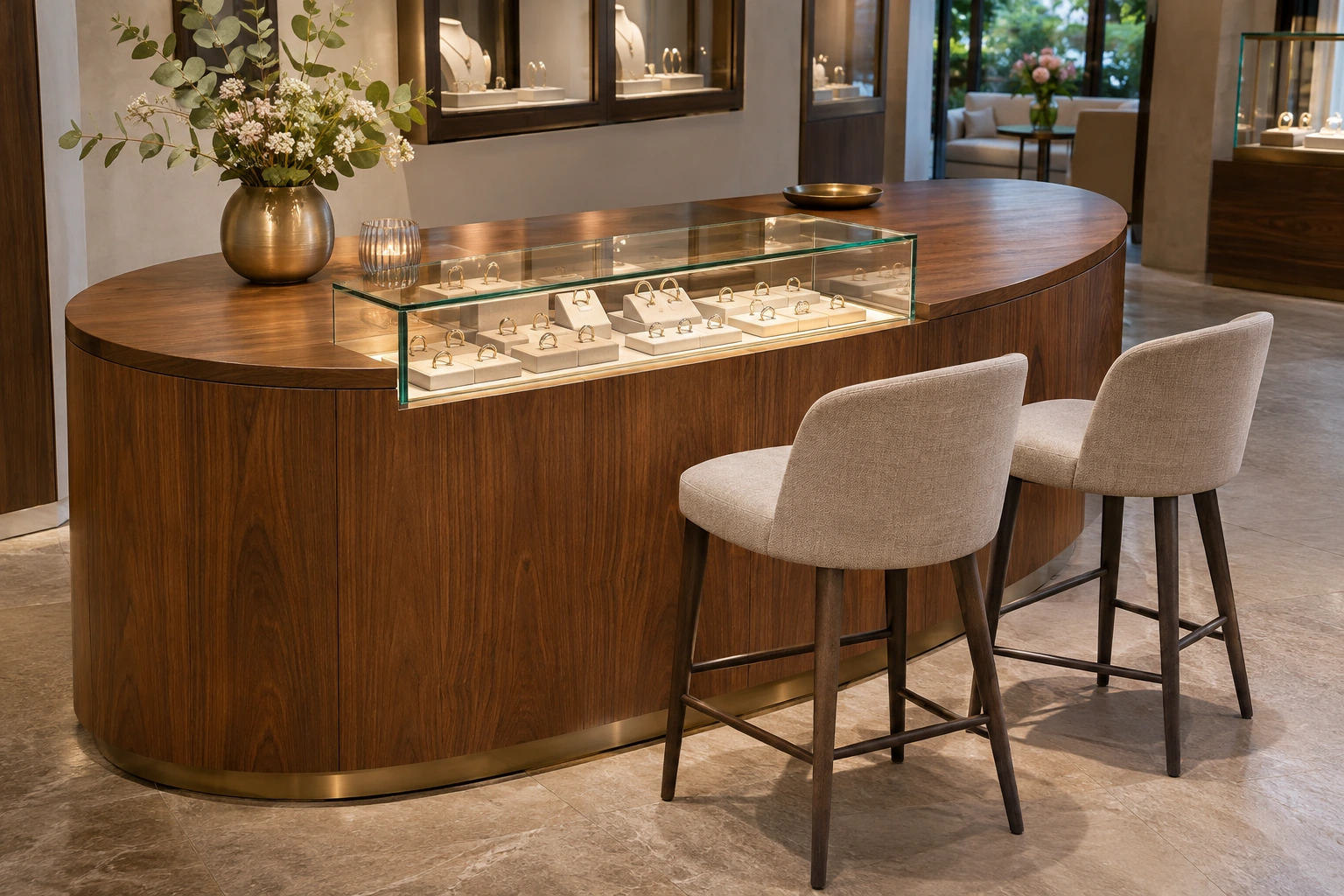
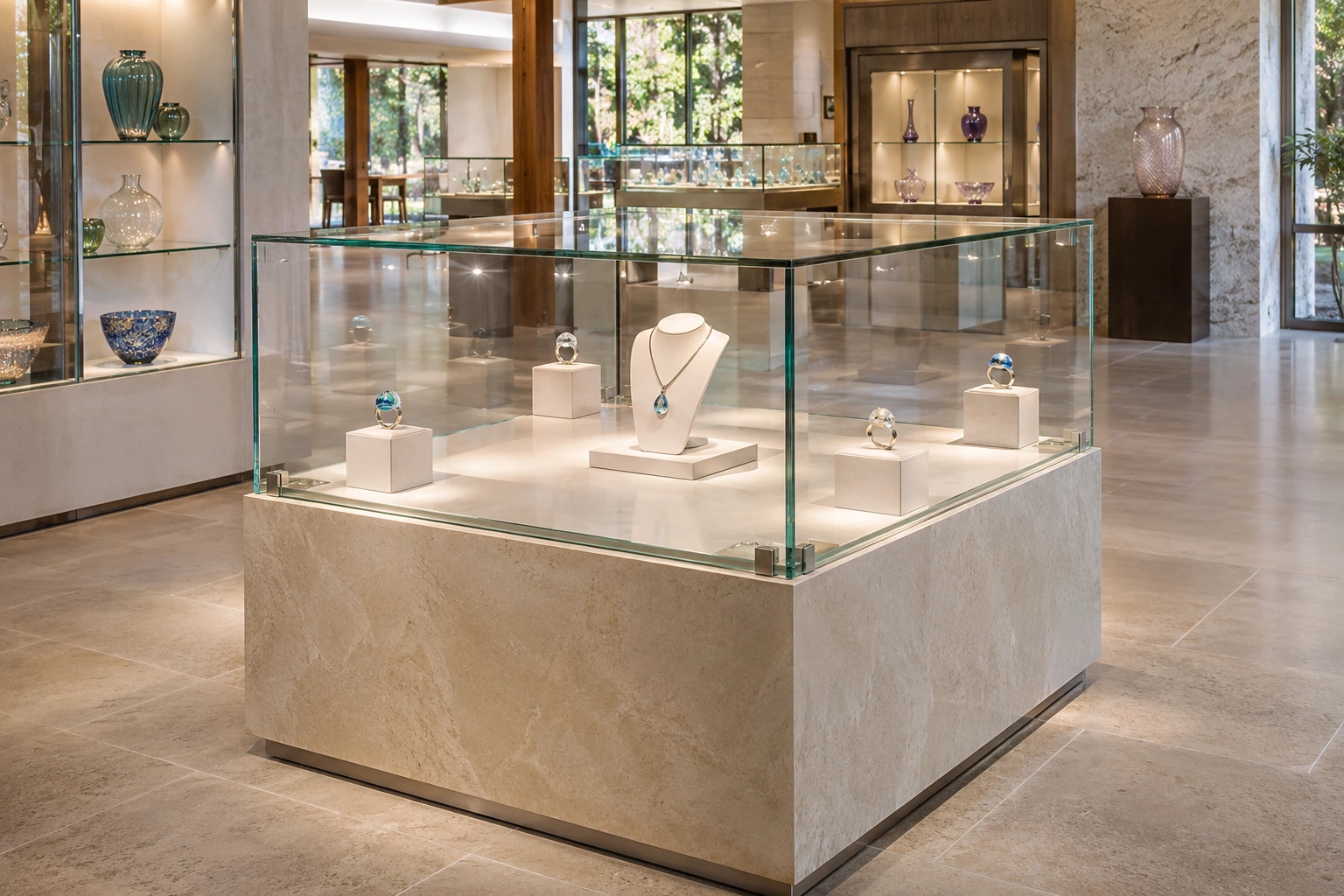
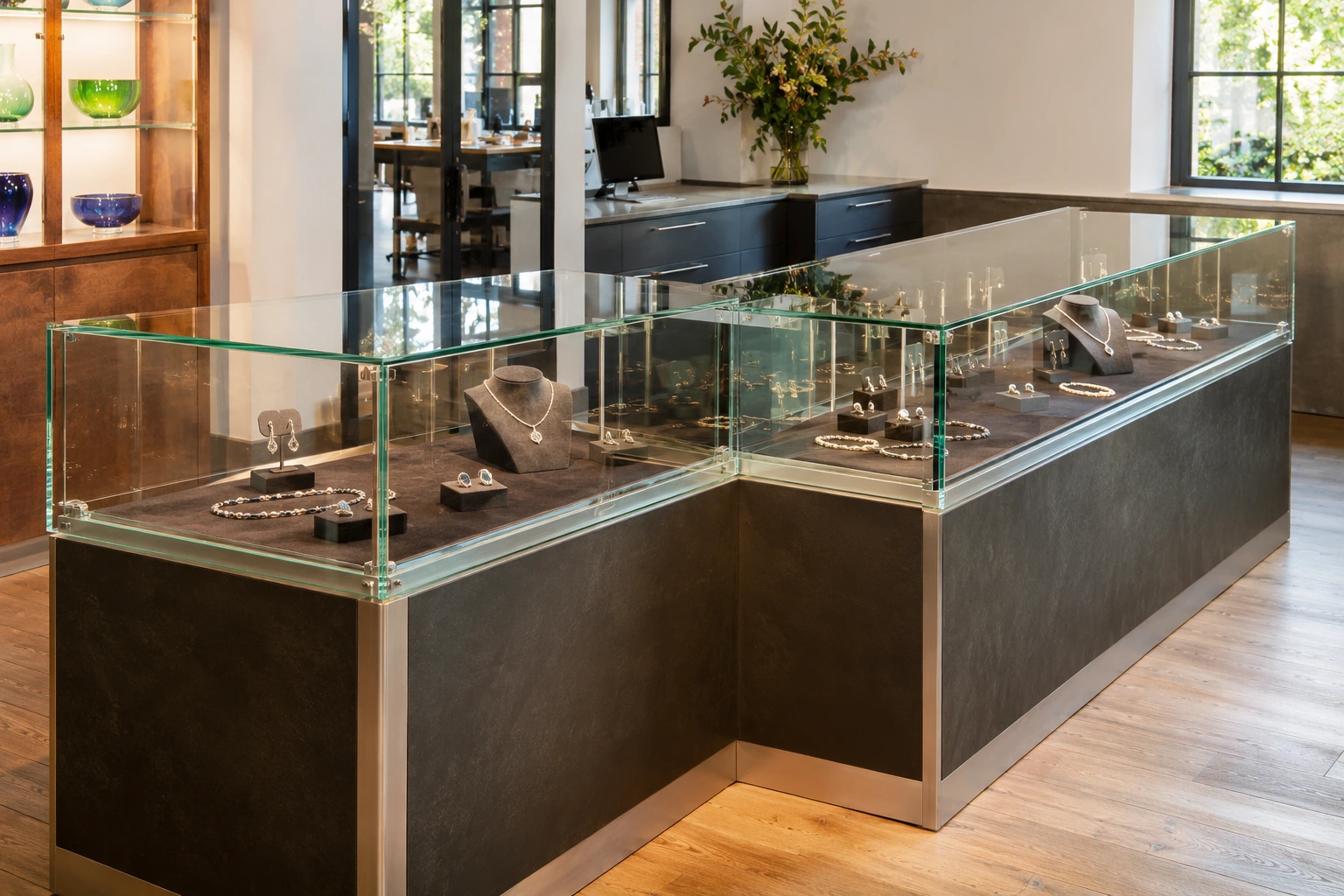
Set two ring trays, a ring sizer and a mirror on the proposed counter. You can then see whether two customers have room to try on rings and where the salesperson can set down the next tray. The view from the customer’s side matters just as much as the reach from behind the counter.
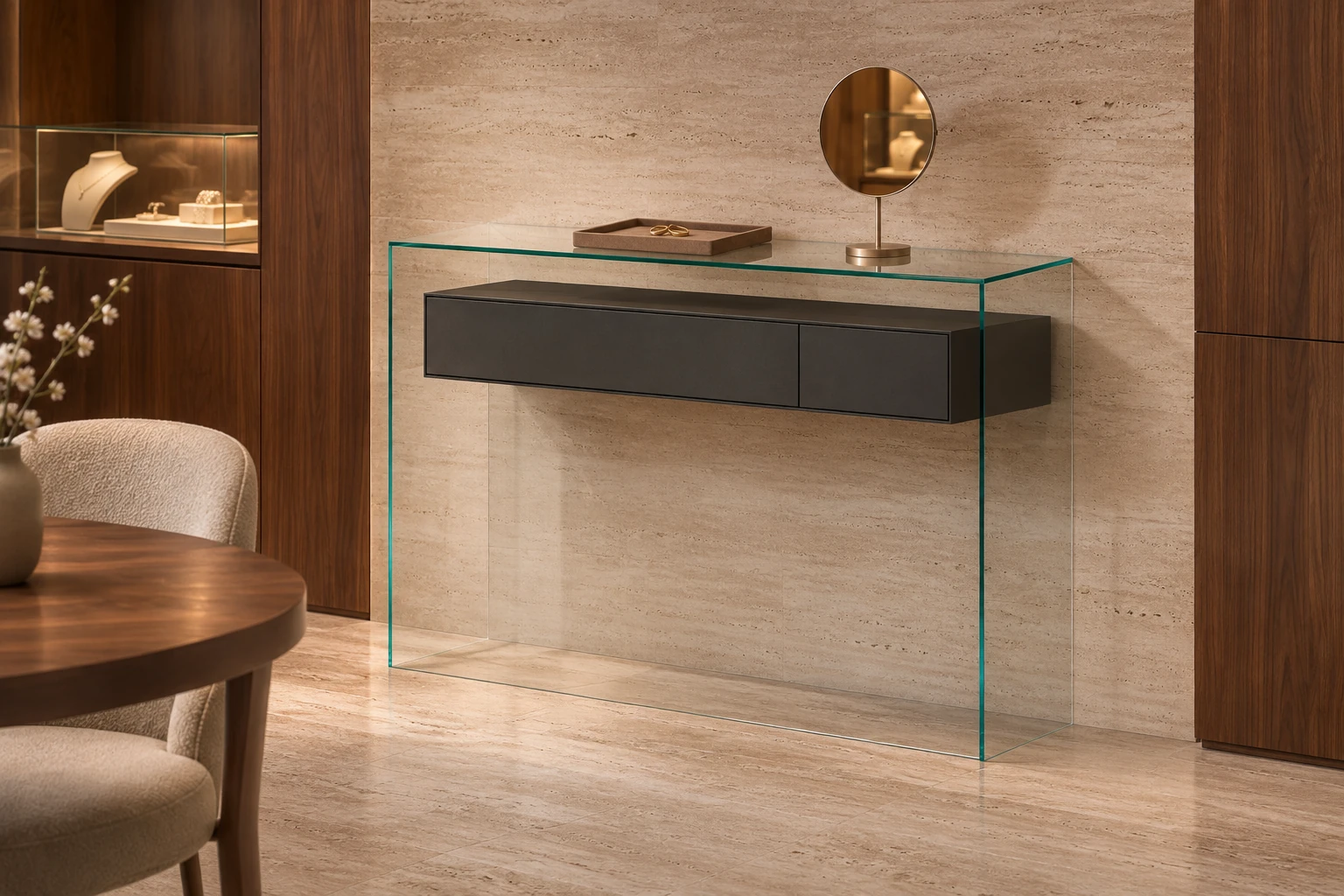
For a drawer counter, measure the largest tray and check that the drawer can open during a consultation. Staff-side doors offer another layout. Allow for the aisle, the opening movement and a clear surface where the pieces can be set out within easy reach.
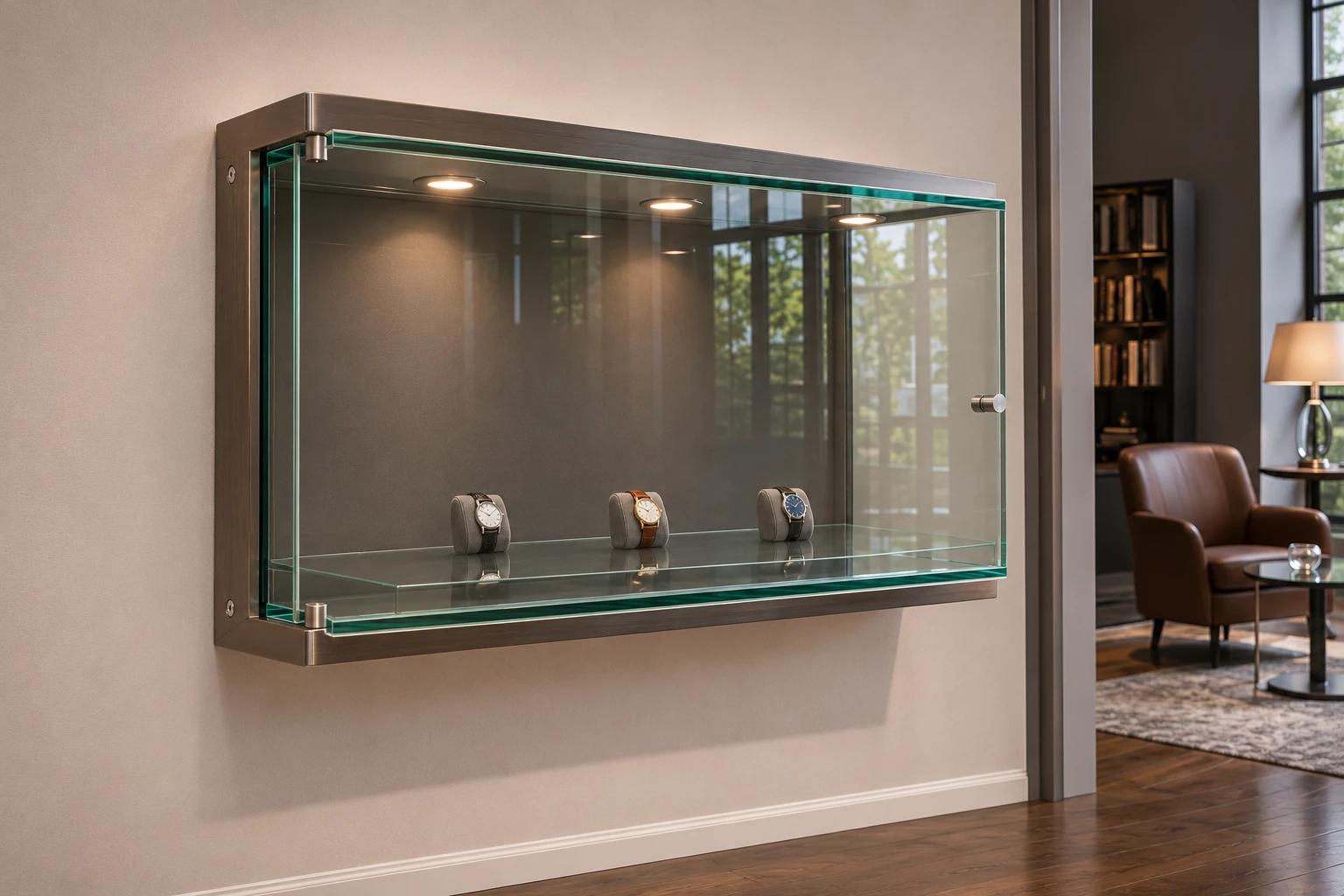
Watch displays sized to the collection
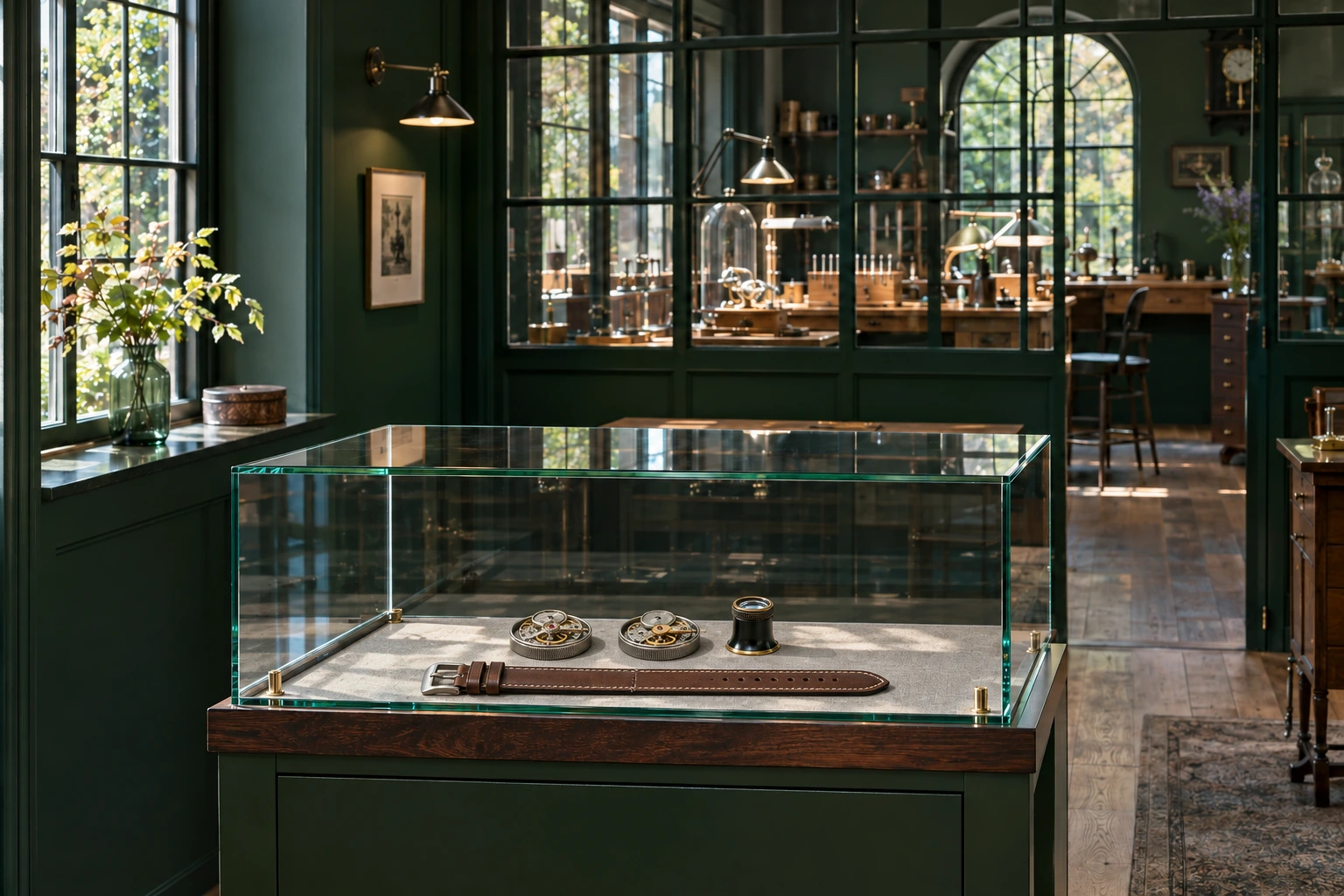
A watch on a cushion can be much deeper than a bracelet laid flat. Measure your actual stands with the watch fastened, including its crown and clasp. Leave finger room so staff can take out one watch without disturbing the next. The number of watches in a row should follow from their sizes and your intended display density.
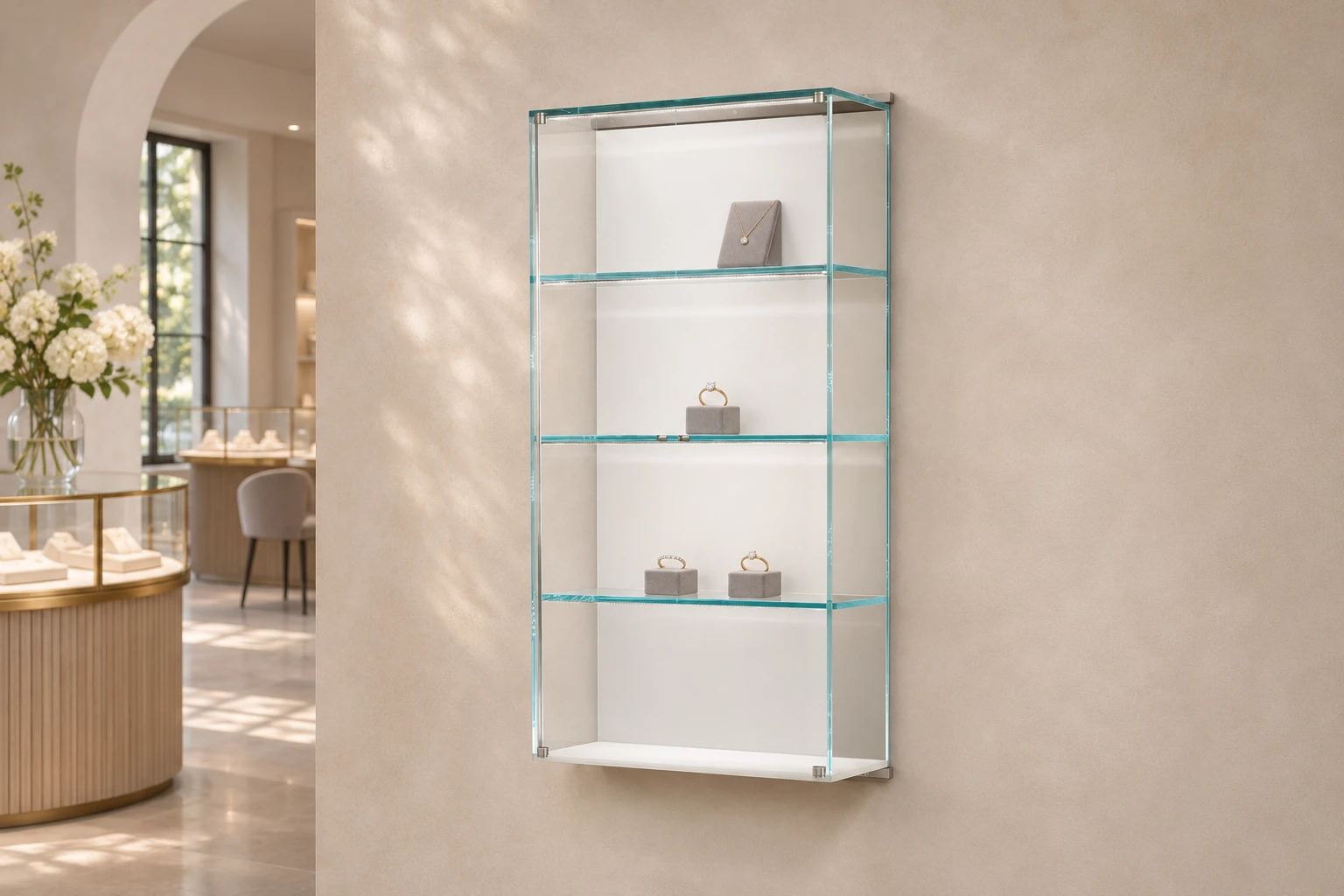
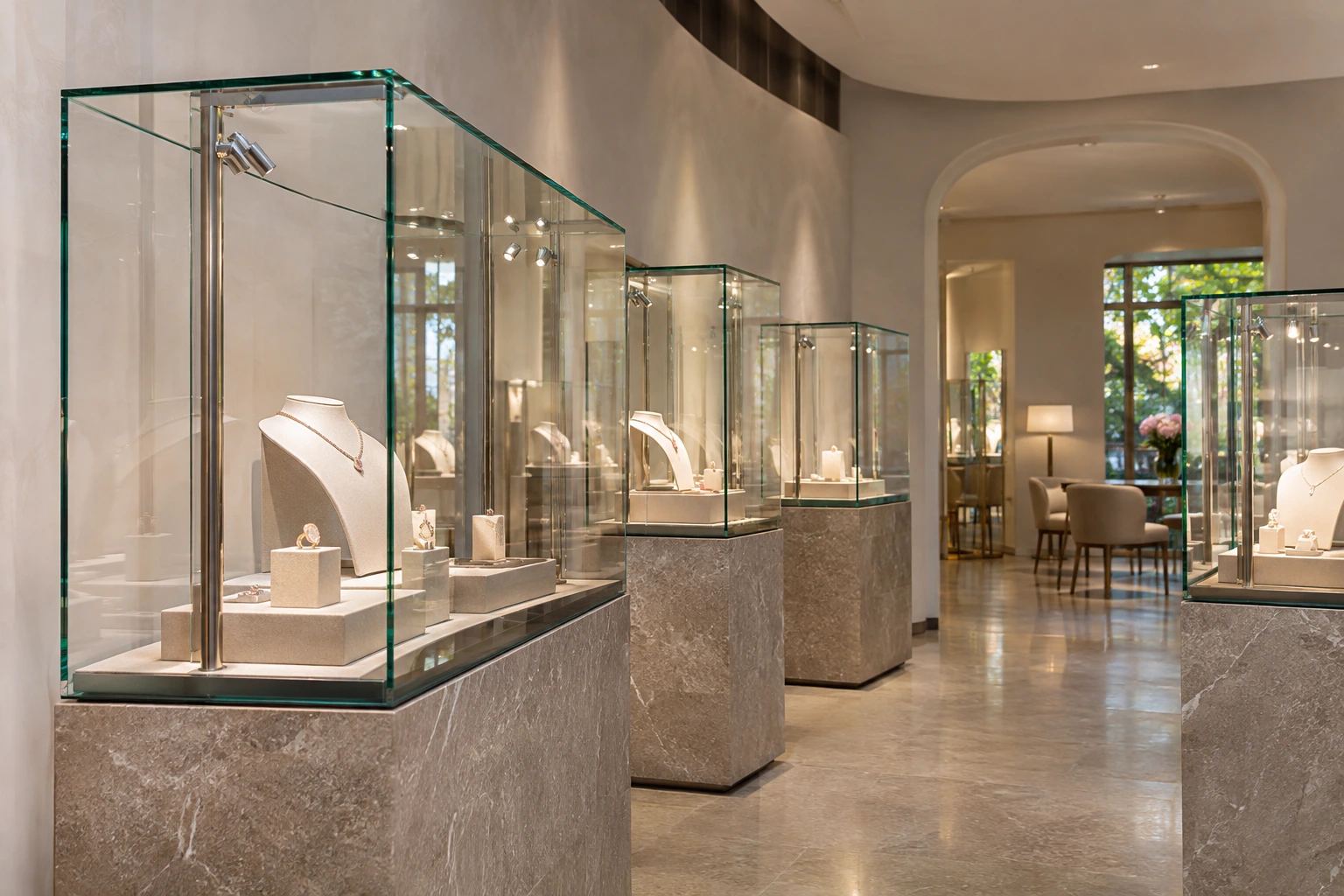
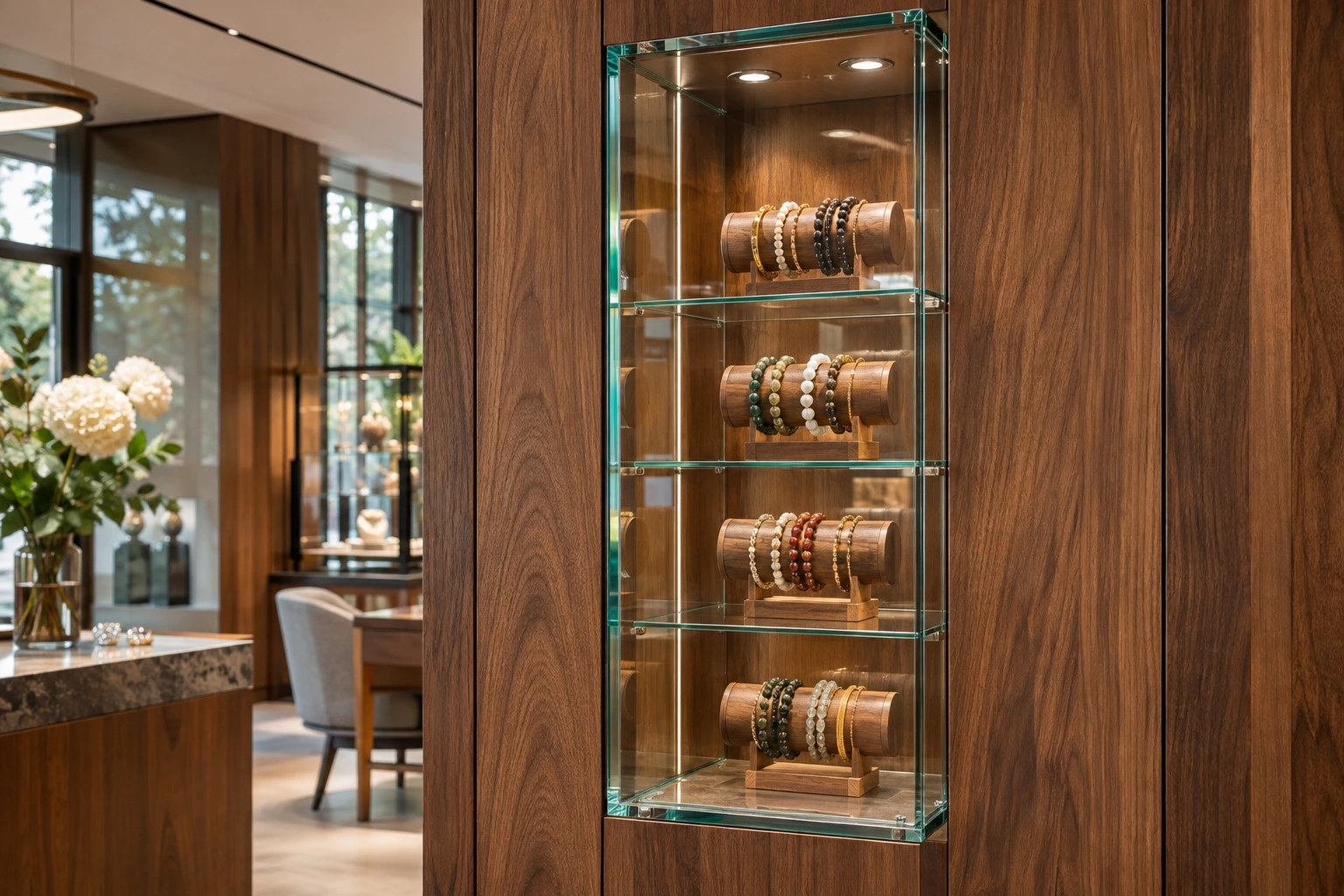
A recessed wall case can bring a small collection up to eye level. Test the lighting with a polished steel case, a dark dial and a pale strap side by side. A small change in the angle of the cushion can move a reflected light fitting away from the face.
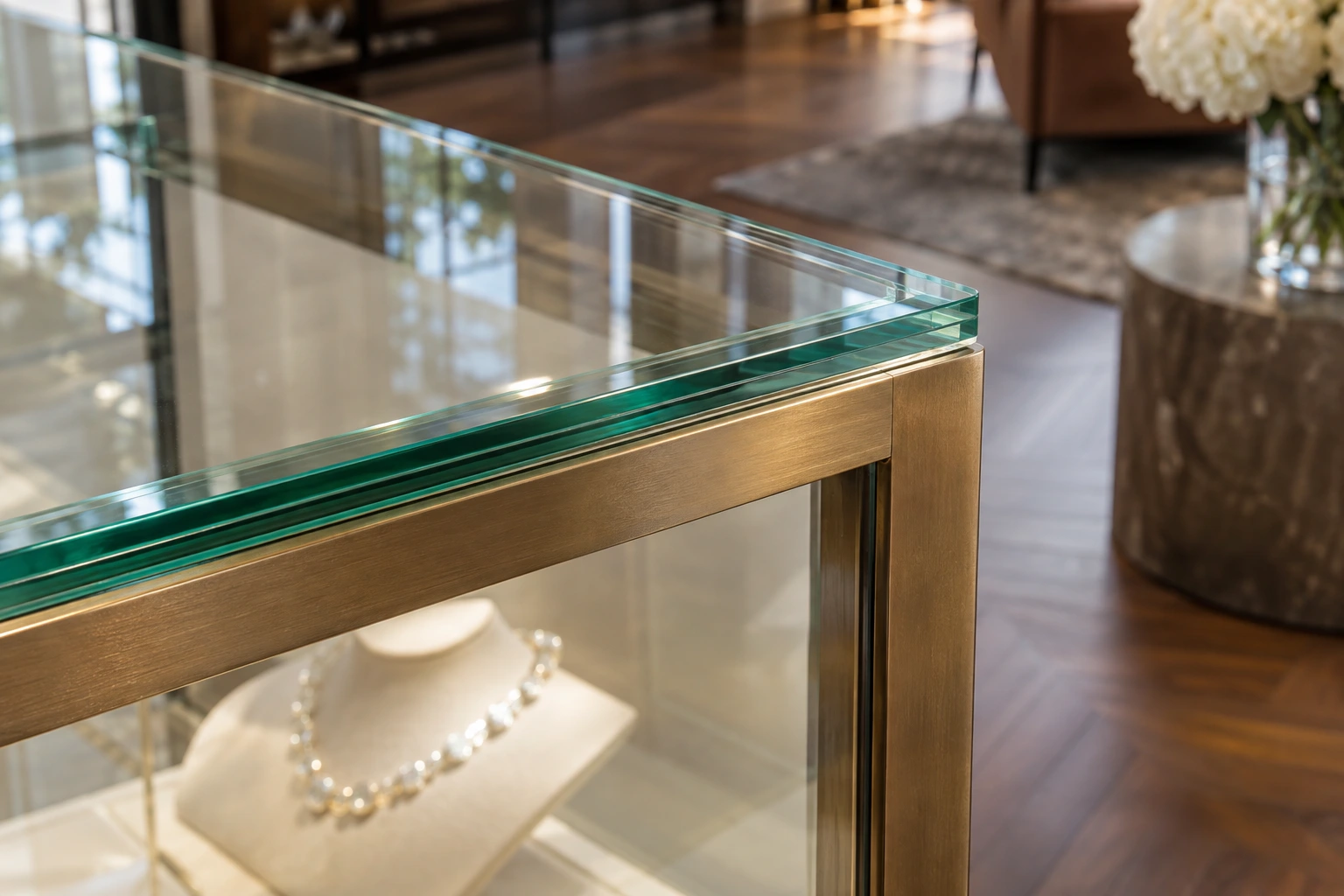
Locks and security glazing for your shop
For a compartment opened throughout the day, consider which side staff use and who holds the keys. Depending on how you operate, individual keys or several compartments keyed alike may be suitable. For high-value stock, establish the protection required with your insurer before choosing the cabinet construction.
Laminated safety glass can retain broken glass on an interlayer. Resistance to manual attack calls for a glazing build-up tested for that purpose. EN 356 covers the glazing itself. The protection offered by the assembled case also depends on its frame, lock and fixing. If your insurer needs evidence for the complete showcase, include that requirement in the project brief.
Ideas for your project
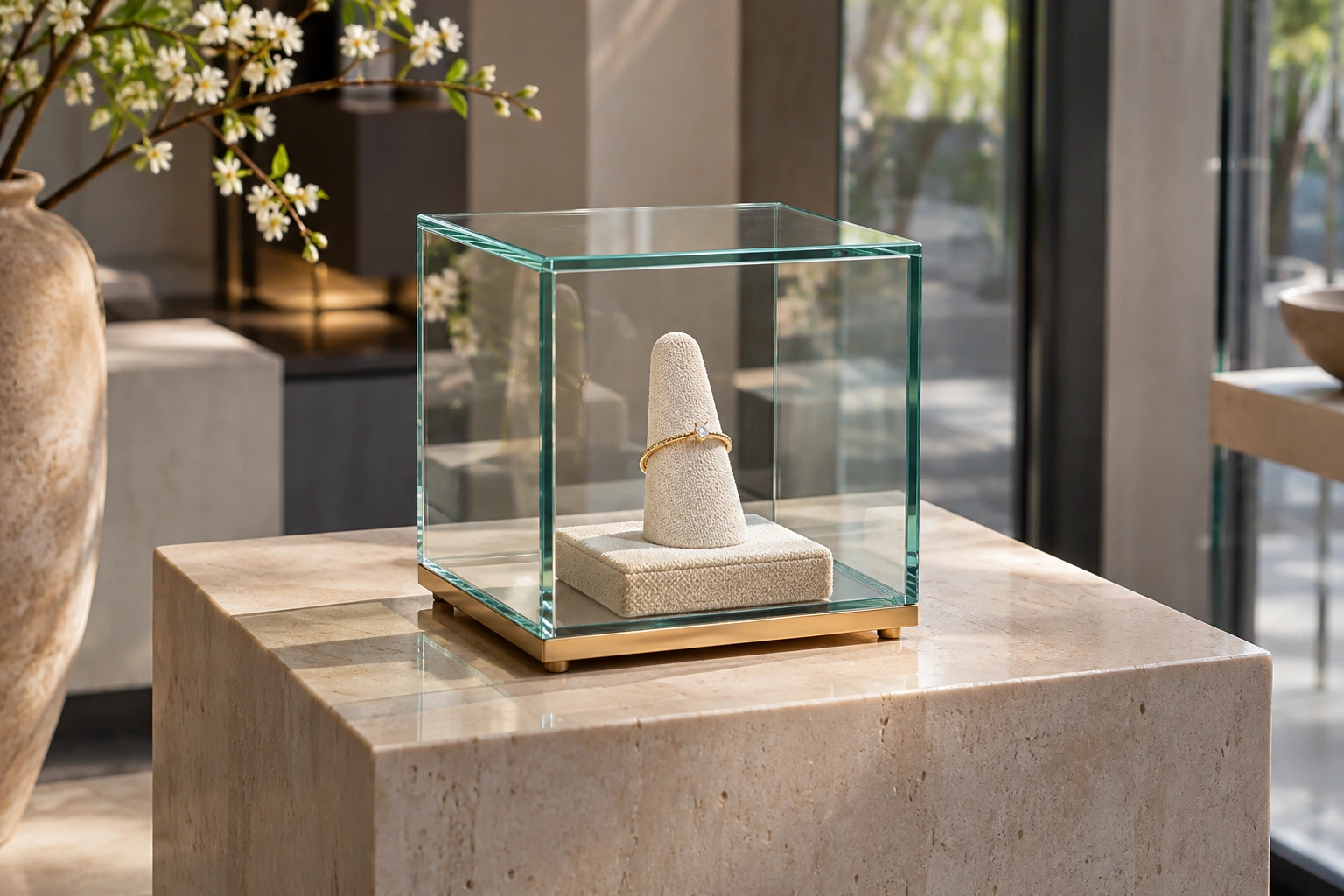
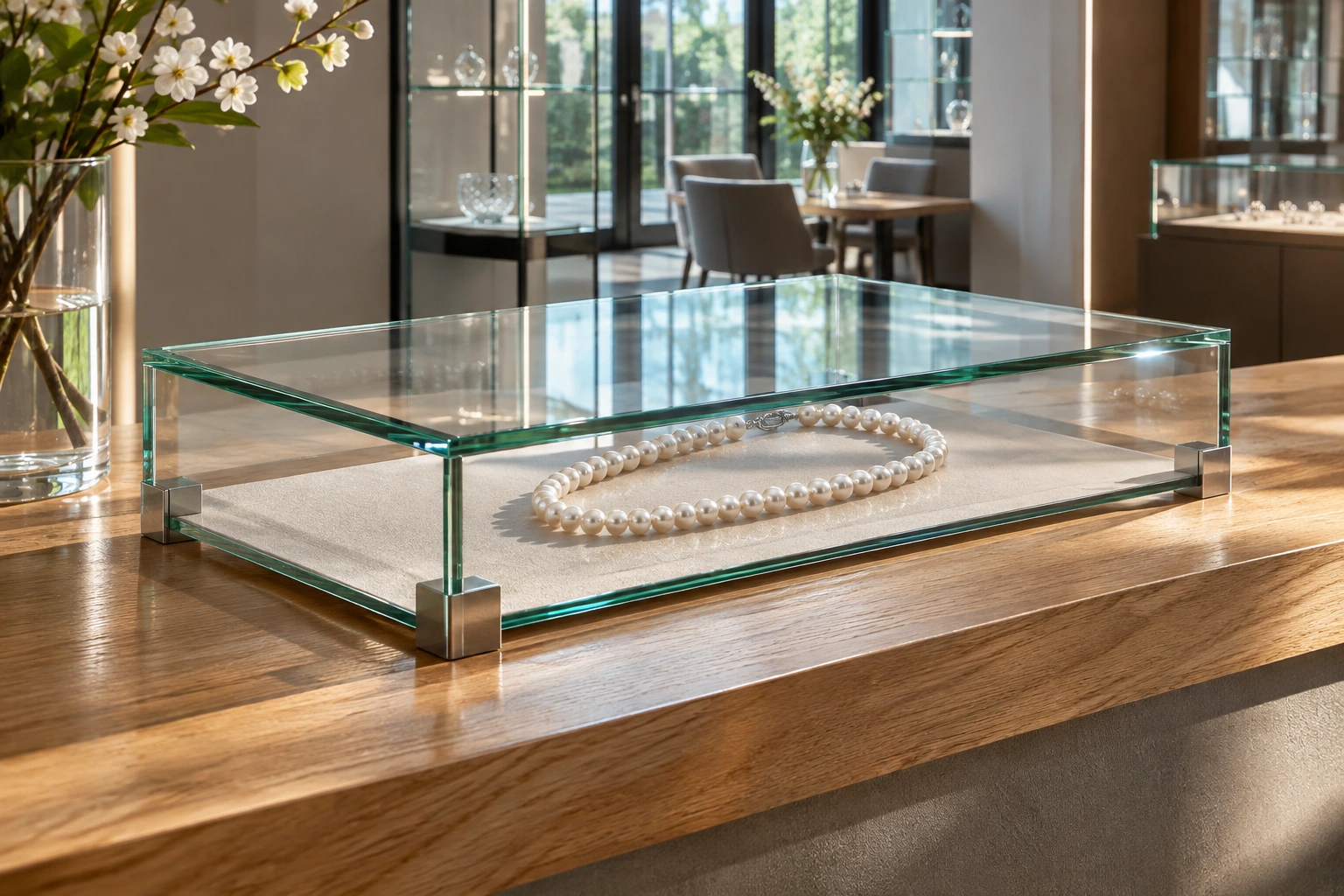
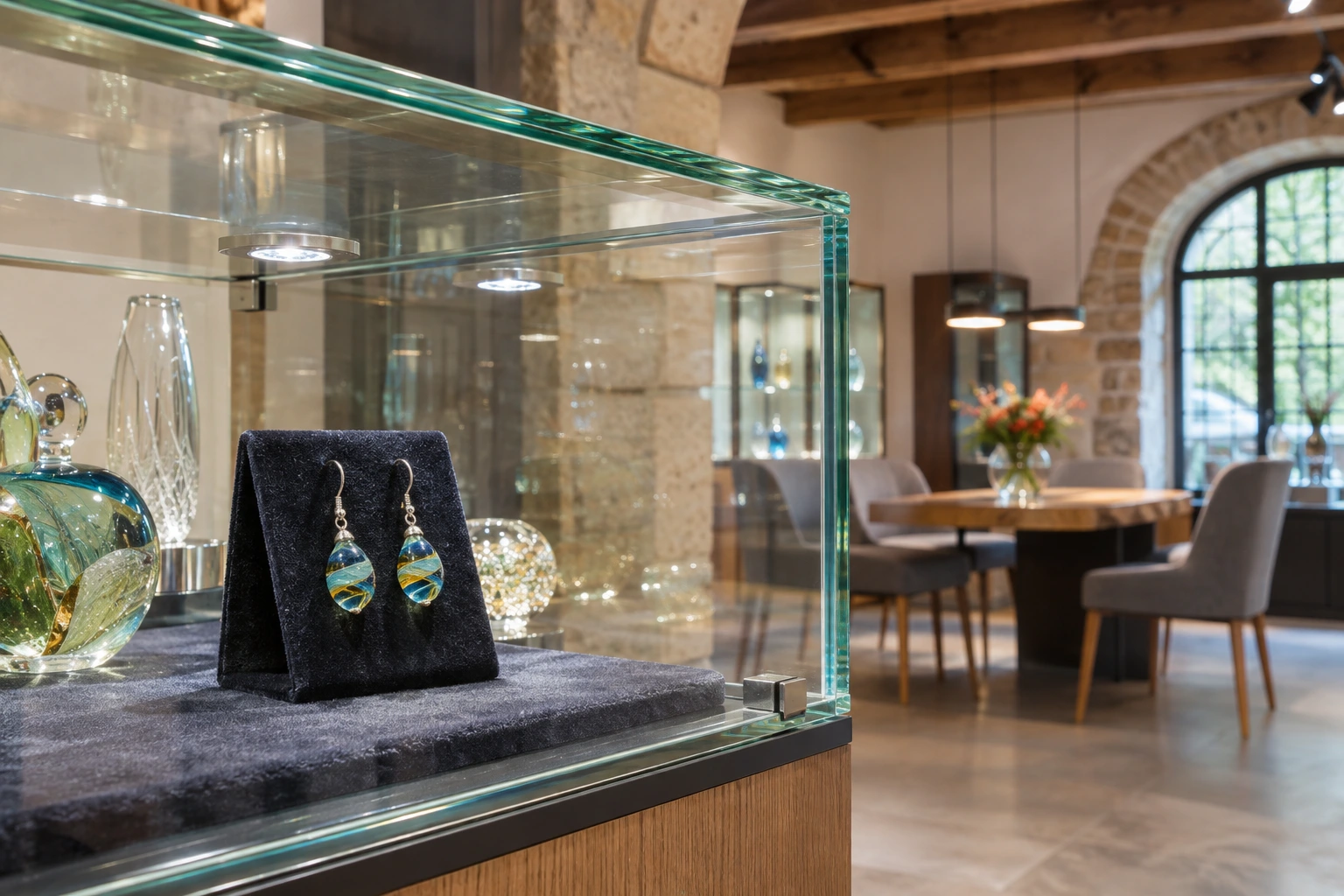
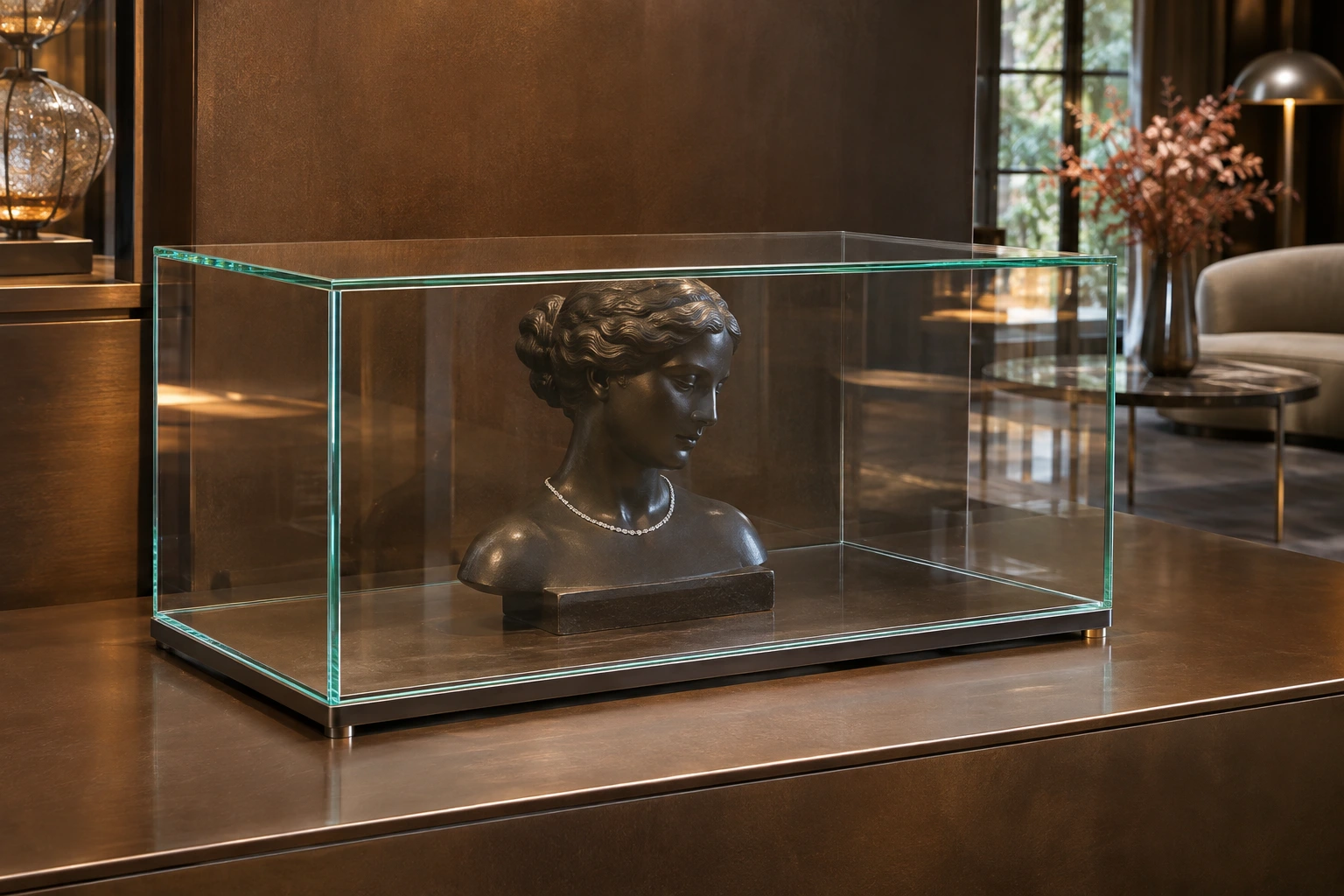
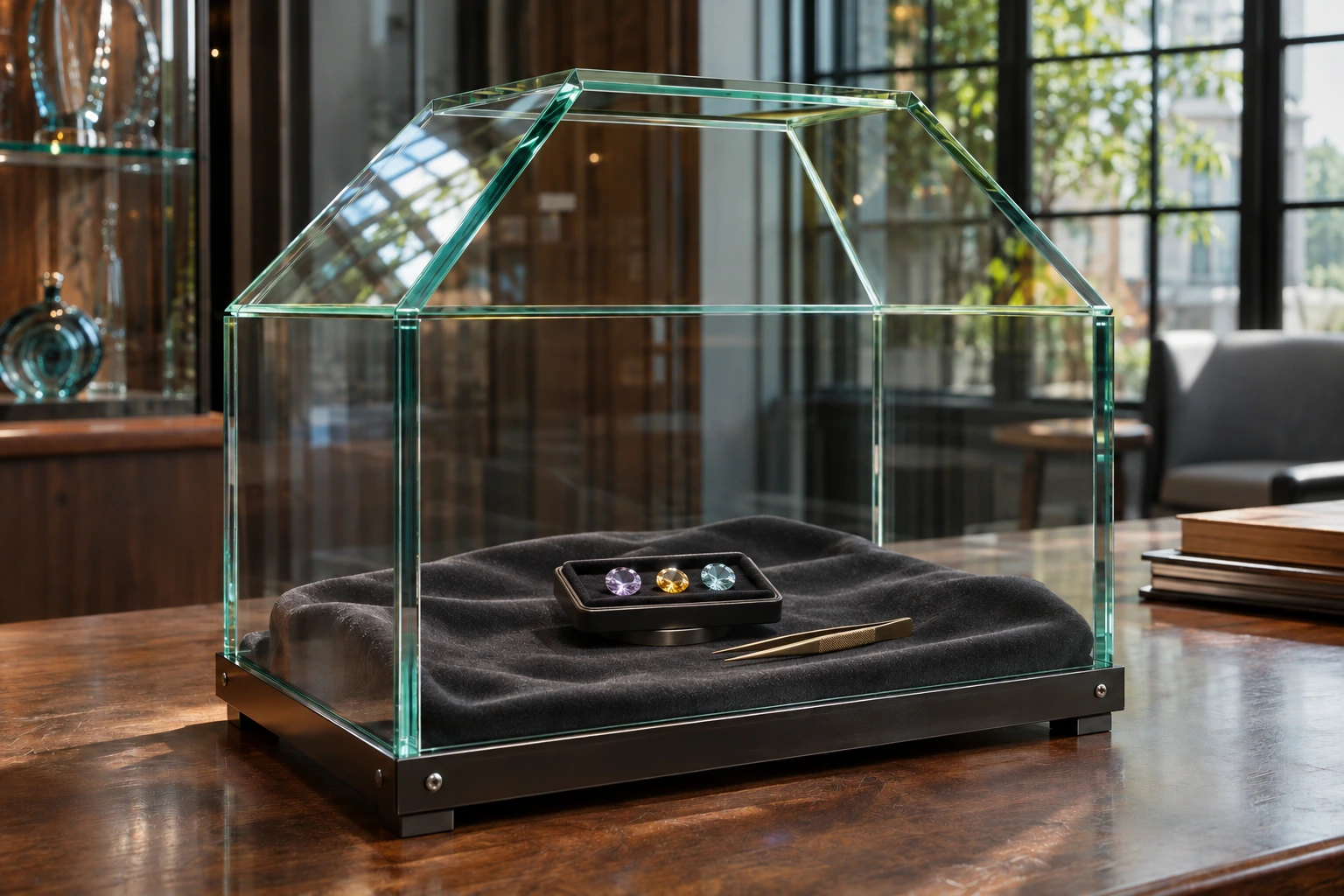
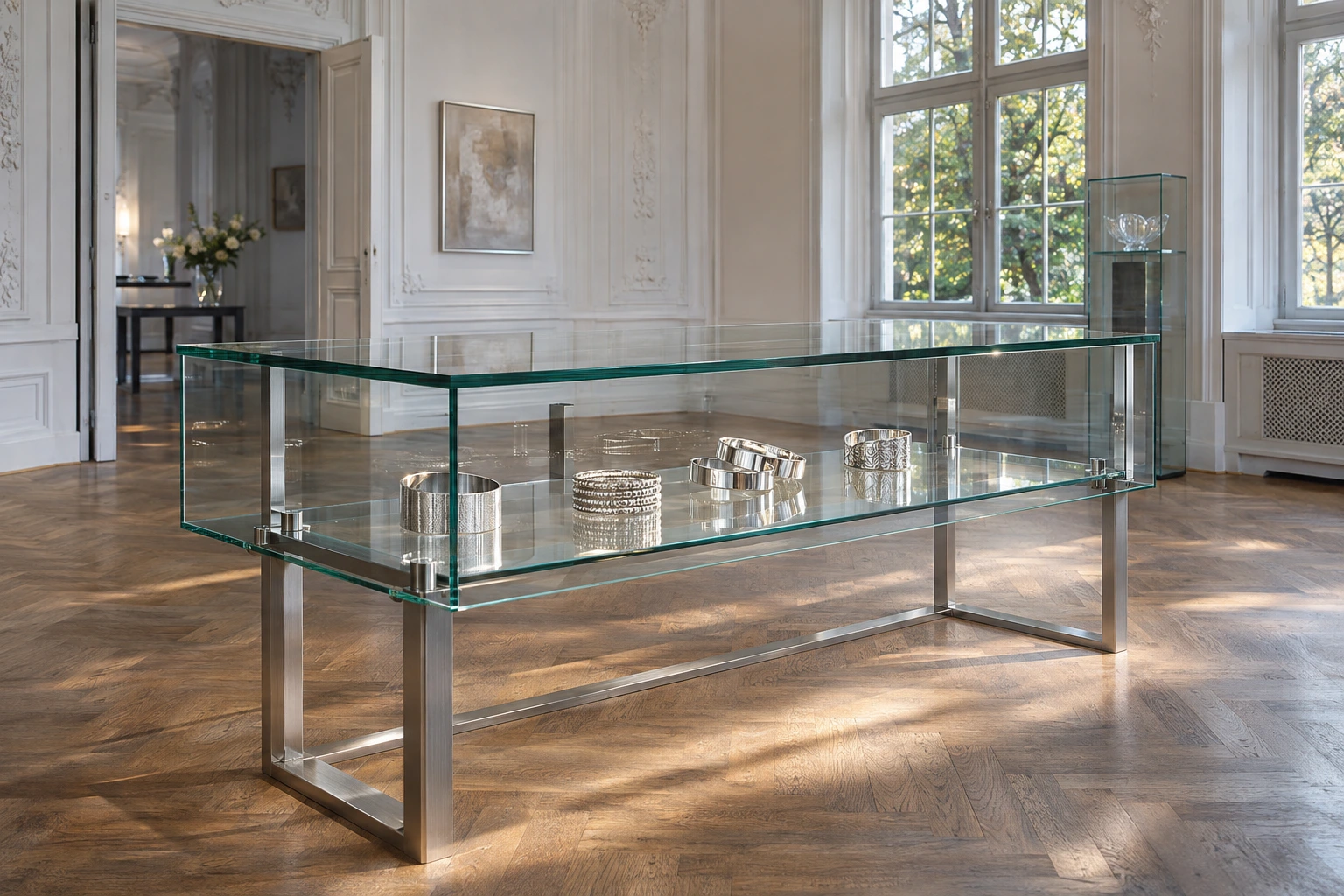
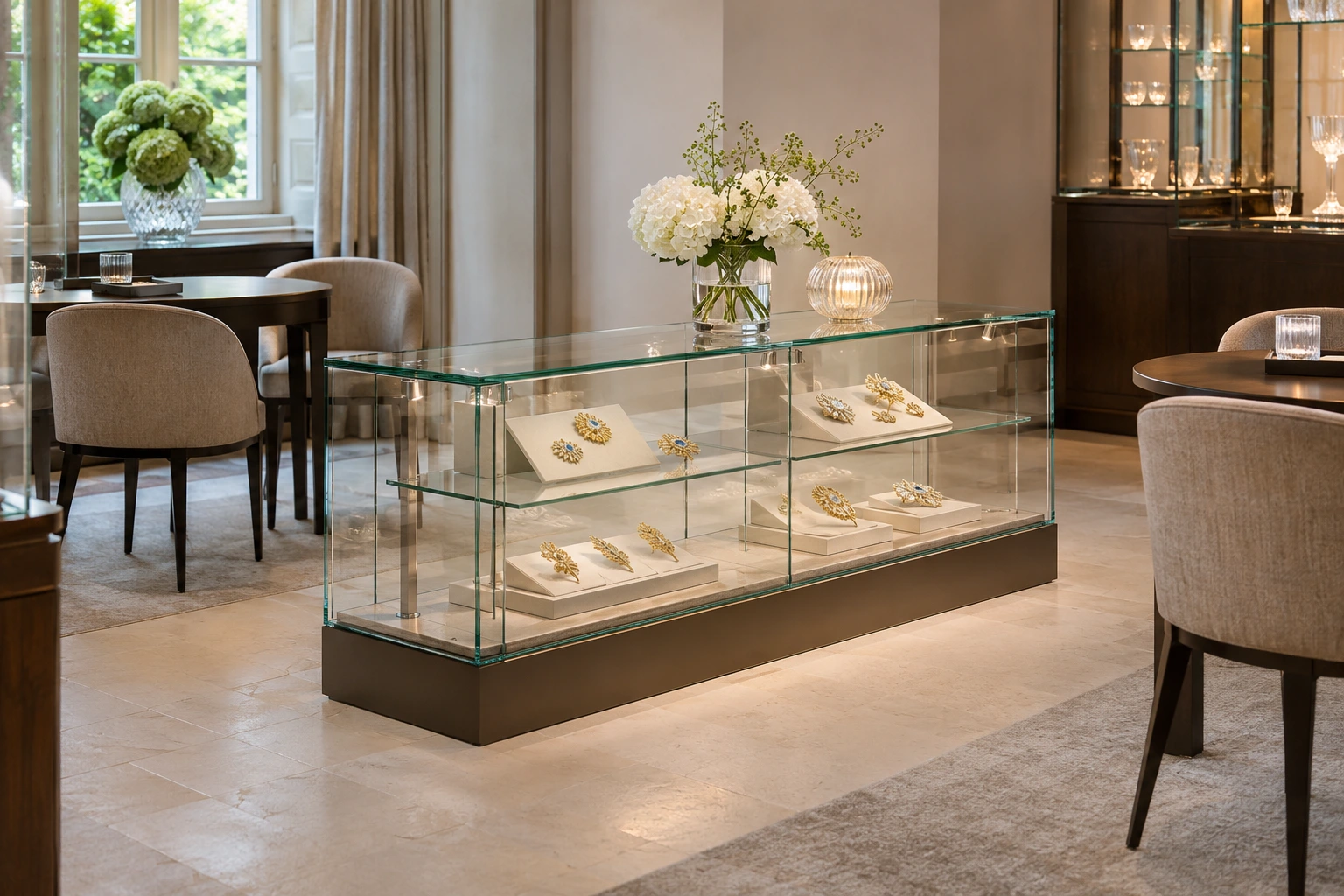
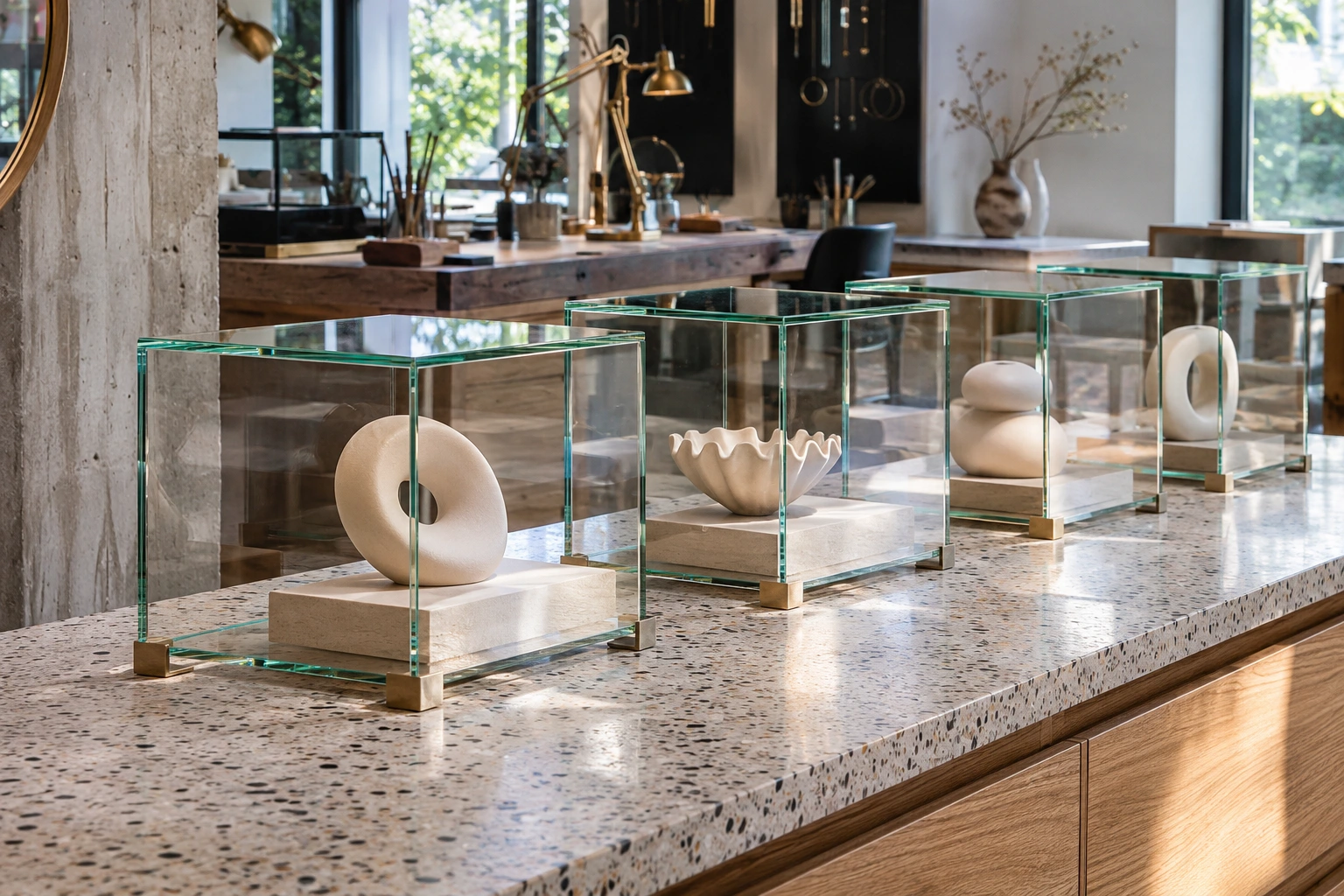
These visualisations illustrate how bespoke furniture could work in this setting.

Planning questions
Could a new counter fit into our existing shop interior?
Supply photographs, clear dimensions and the heights of neighbouring cabinets. Mark the staff aisle and any existing doors or drawers that will need room to open.
What information helps you prepare a quotation?
Tell us the type and number of cases, the location, target date and the largest tray or item. Include any insurer requirements and whether staff clear the cases each night.
Would a glass cover work for one special piece?
A small cover on a plinth gives a single piece its own display. Consider how often the piece will be taken out, who will open the cover and what protection is required in that part of the shop.
Your project with DREIECK DESIGN
Tell us about the space, the furniture you need and your schedule. Approximate dimensions and quantities are enough to start the conversation.