- Free Delivery in DE, AT & CH
- Made in Germany
- Individual Customisation Available


Living · Planning · Understanding materials
Begin with bed access and wardrobe movement, then choose nightstands and lighting. The room should work when you are getting dressed, making the bed or reaching for a book, not only when everything is perfectly arranged.
A restful-looking bedroom does not require one prescribed color or style. Choose a palette you like, limit recurring clutter and plan the functions close to the bed. Materials and proportions can then support that arrangement.
Rooms · 01
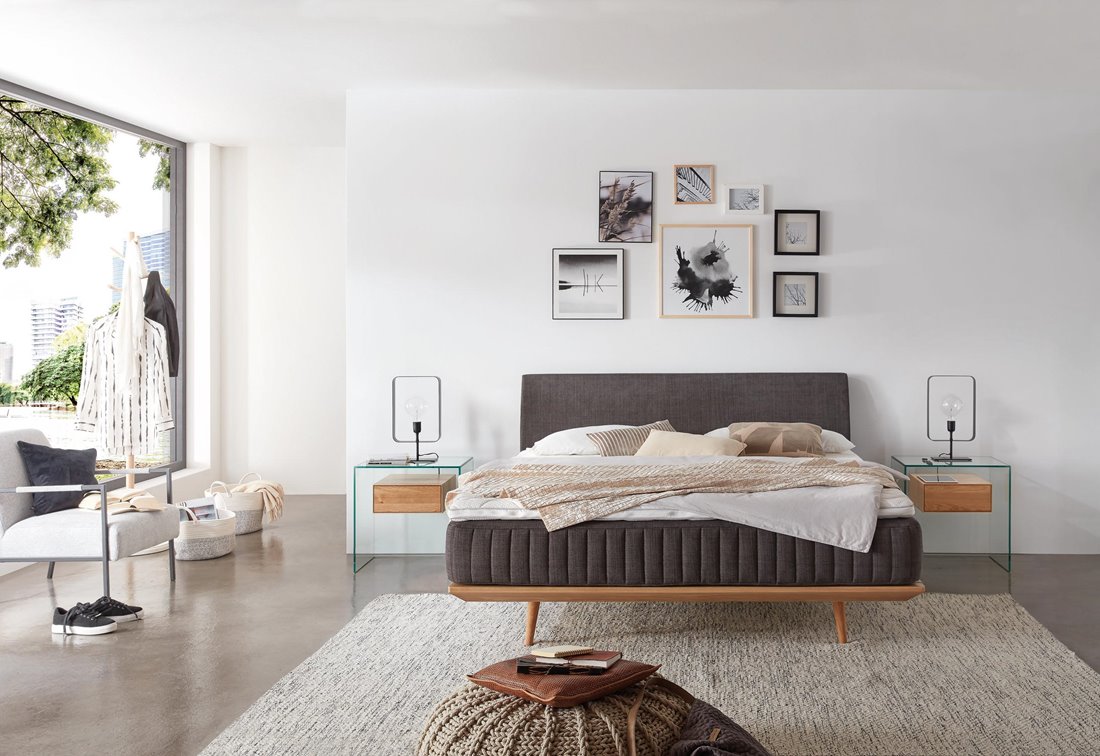
Draw the bed frame’s outside dimensions, not only the mattress. Include a projecting headboard and any storage drawers beneath it. Walk around the taped outline and test the route to the wardrobe and door.
Access requirements differ by person and household. Decide who uses each side, whether assistance is needed and how you make the bed. Do not treat a narrow gap that looks acceptable on paper as a final solution.
Rooms · 02
Open wardrobe doors and pull drawers fully out in the plan. Leave room for somebody to stand in front of them. Sliding doors change the movement pattern, but do not remove the need for usable access and a place to sort clothes.
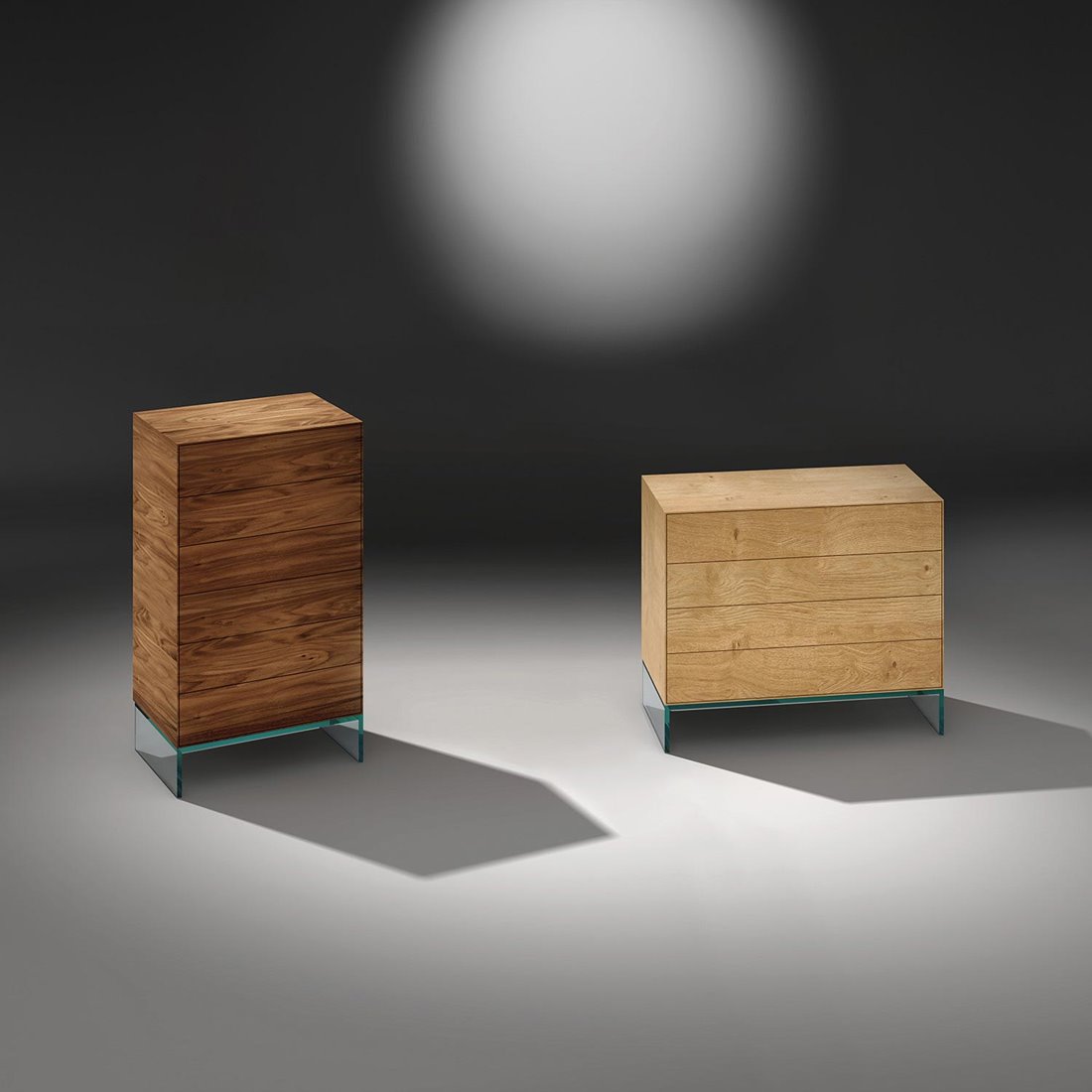
If additional storage is needed, determine what belongs in it before adding a chest. A deeper drawer unit may suit clothing, while a slim console may serve a different task. Their outside dimensions do not tell you the usable internal capacity.
Rooms · 03
Measure the top of the mattress in normal use. A nightstand near that level can make a lamp, glass of water or phone easier to reach. Test from your usual sleeping position rather than standing beside the bed.
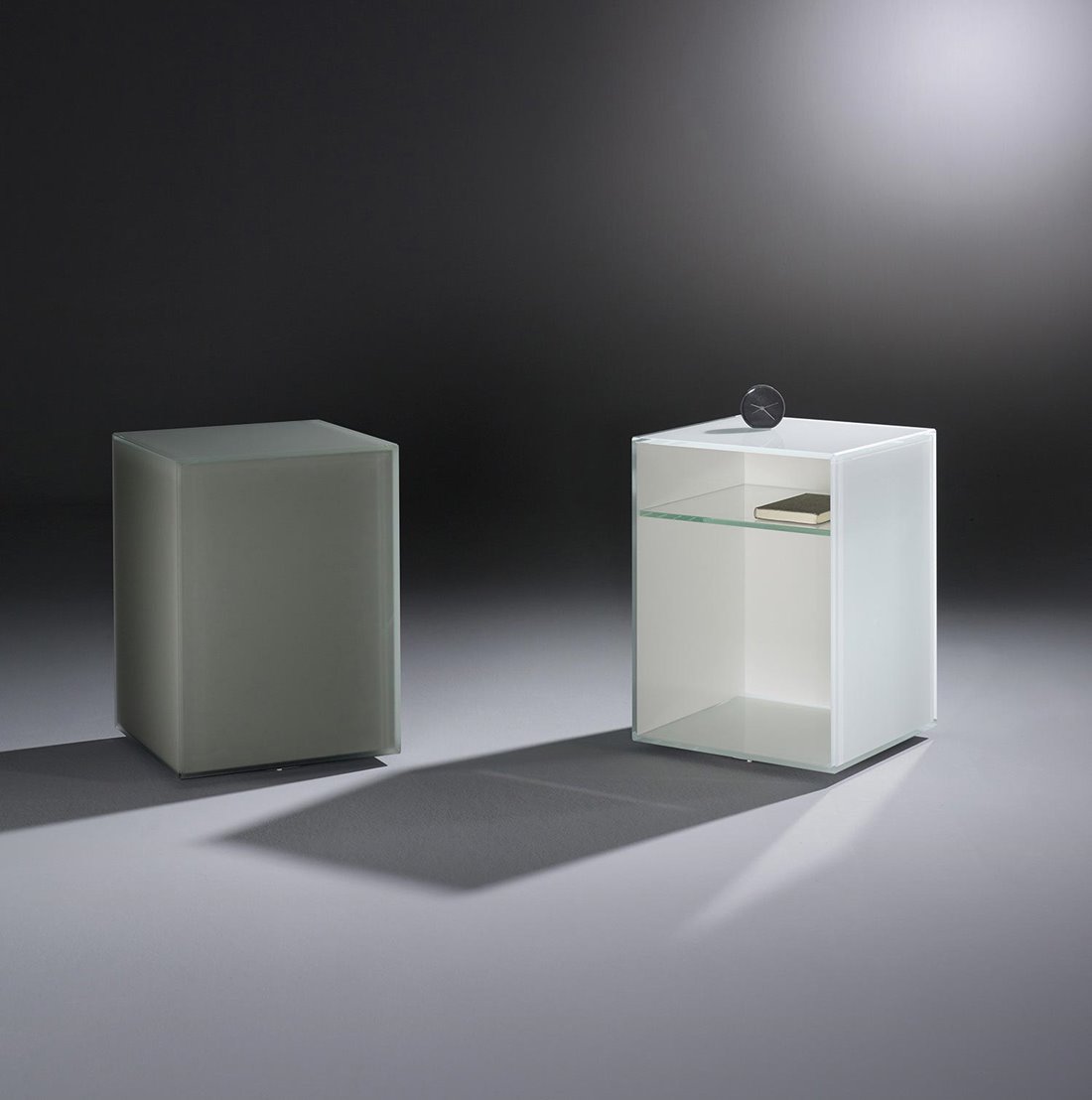
Draw the items you keep there on a paper template. Include the lamp base and charging lead. One drawer can hide small items; an open shelf can hold a book. Choose the layout from your routine rather than assuming both sides need identical furniture.
Rooms · 04
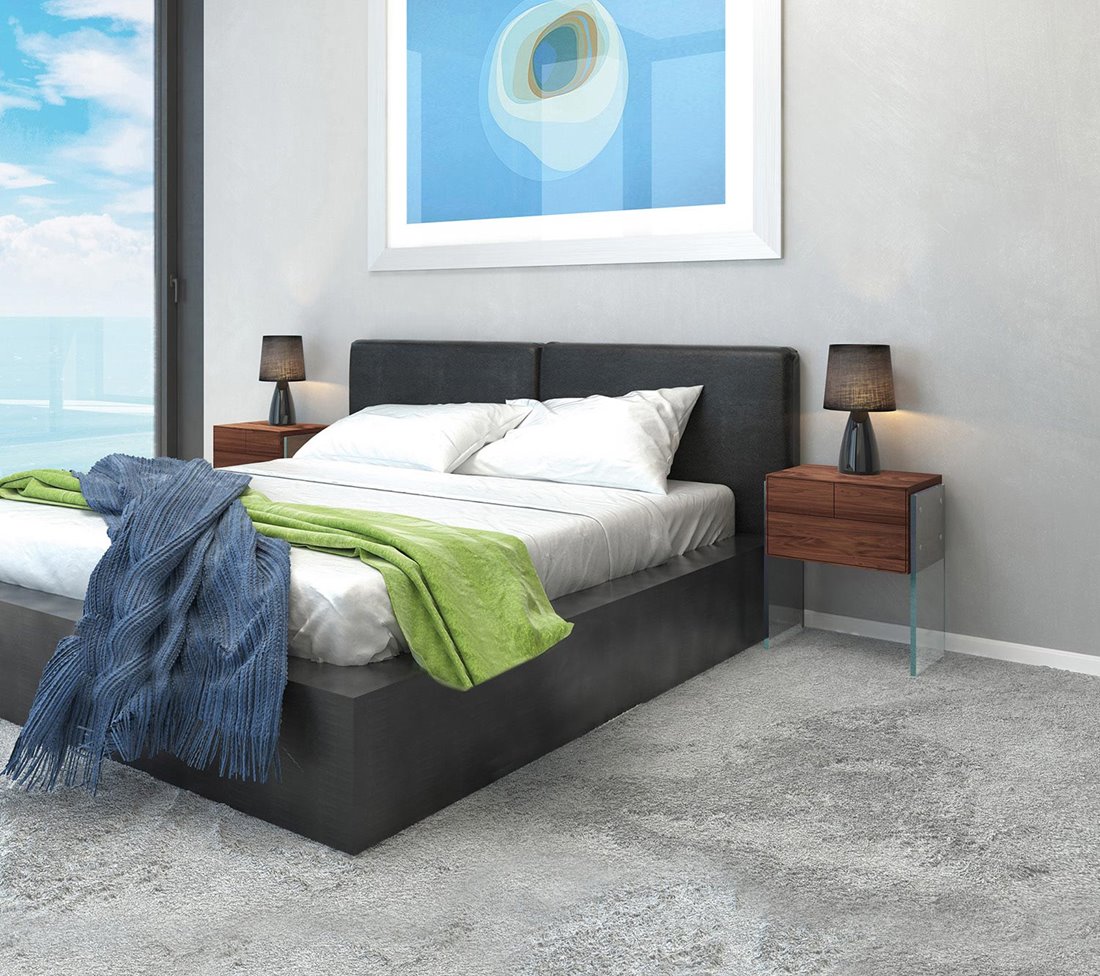
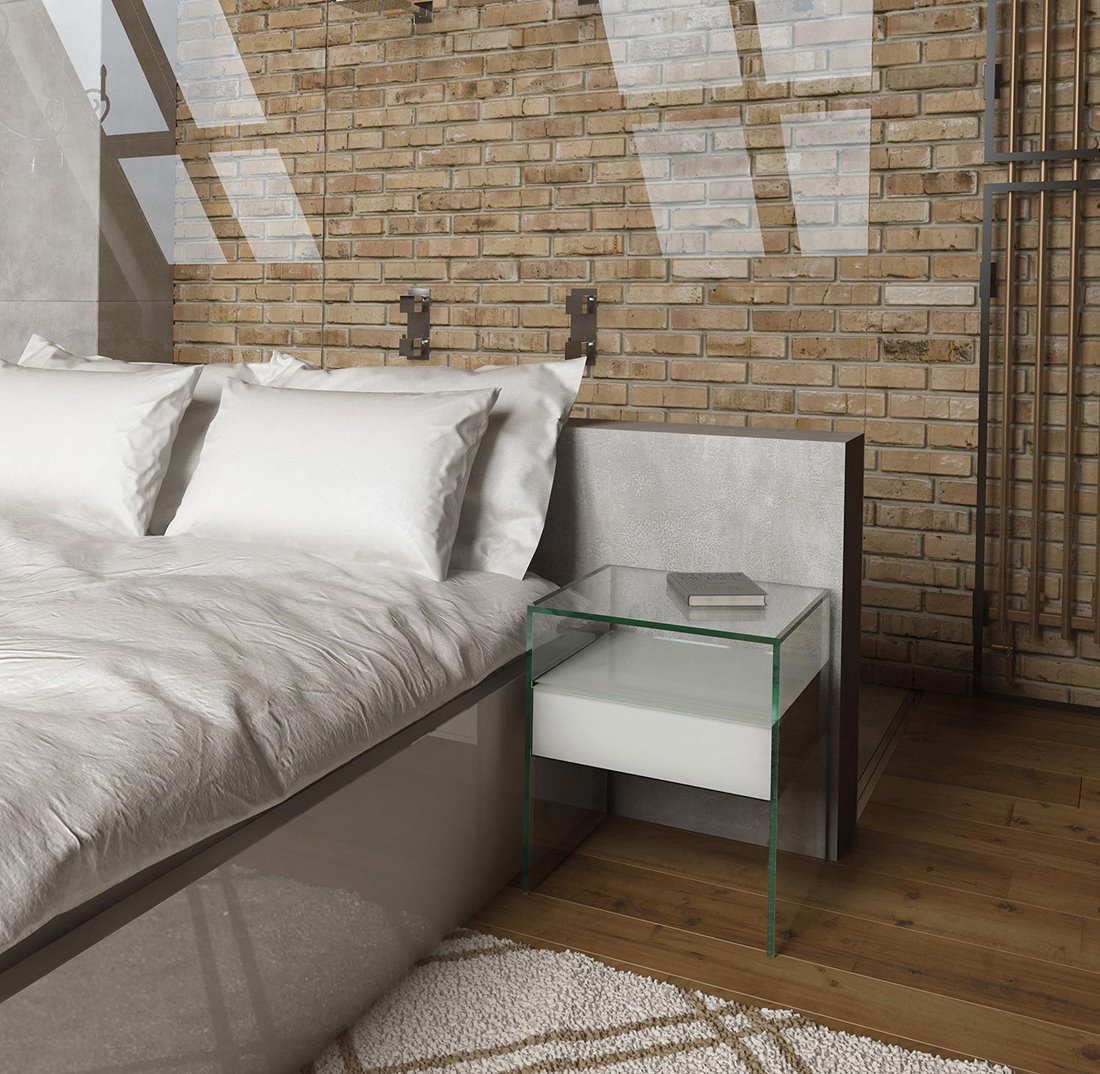
Clear glass gives a lighter outline beside a bed. A wood drawer adds grain and closed storage. A wall-mounted design may leave more floor visible, but needs a suitable wall and careful positioning.
Check what sits behind and below the glass. Visible cables or an untidy power strip can become part of the appearance. Plan them before installation rather than adding improvised covers later.
Rooms · 05
Compare finishes in both daylight and bedside light. Pale tones can form a quiet background; deeper colors can create a more enclosed atmosphere. Choose by preference and the room’s conditions rather than promises that one color guarantees better sleep.
Use separate lighting for movement, dressing and reading where useful. Check that a bedside lamp does not shine directly into the other person’s eyes. Curtains, bedding and a rug can connect the palette without another large furniture purchase.
Rooms · 06
In a compact room, preserve bed and wardrobe access before adding extra surfaces. A practical nightstand need not be large, but it should fit the items used every night. Test the drawer-open position as well as the closed footprint.
If a desk is necessary, give work equipment its own storage and a clear end-of-day routine. Avoid using the nightstand as permanent overflow for cables and paperwork. The separate bedroom-workspace guide covers that combined layout in detail.
| Your situation | What to compare | What to check |
|---|---|---|
| High mattress | Test bedside height from the pillow. | Allow space for the lamp and charging. |
| Small room | Preserve bed and wardrobe access. | Open drawers in the plan. |
| Shared bedroom | Plan each person’s routine and light separately. | Use related finishes without forcing identical pieces. |
Try this before buying
For a mattress top around 25 in (64 cm), compare a proposed nightstand at the bed rather than choosing from a standard table label. Recreate its height and top size, add the lamp footprint and reach from the pillow. If the lamp consumes most of the top, change the light or tabletop size before ordering.
Record the version that works and keep the measurements with your photographs. If you change one item, repeat the relevant test: a different depth, finish or opening direction can affect more than its immediate position. Compare the complete arrangement with the way you actually use the room.
From the plan to a particular piece
These examples show different ways to address the decisions above. Compare the selected dimensions, finish and construction on the product page; photographs may show a particular version rather than every available option.
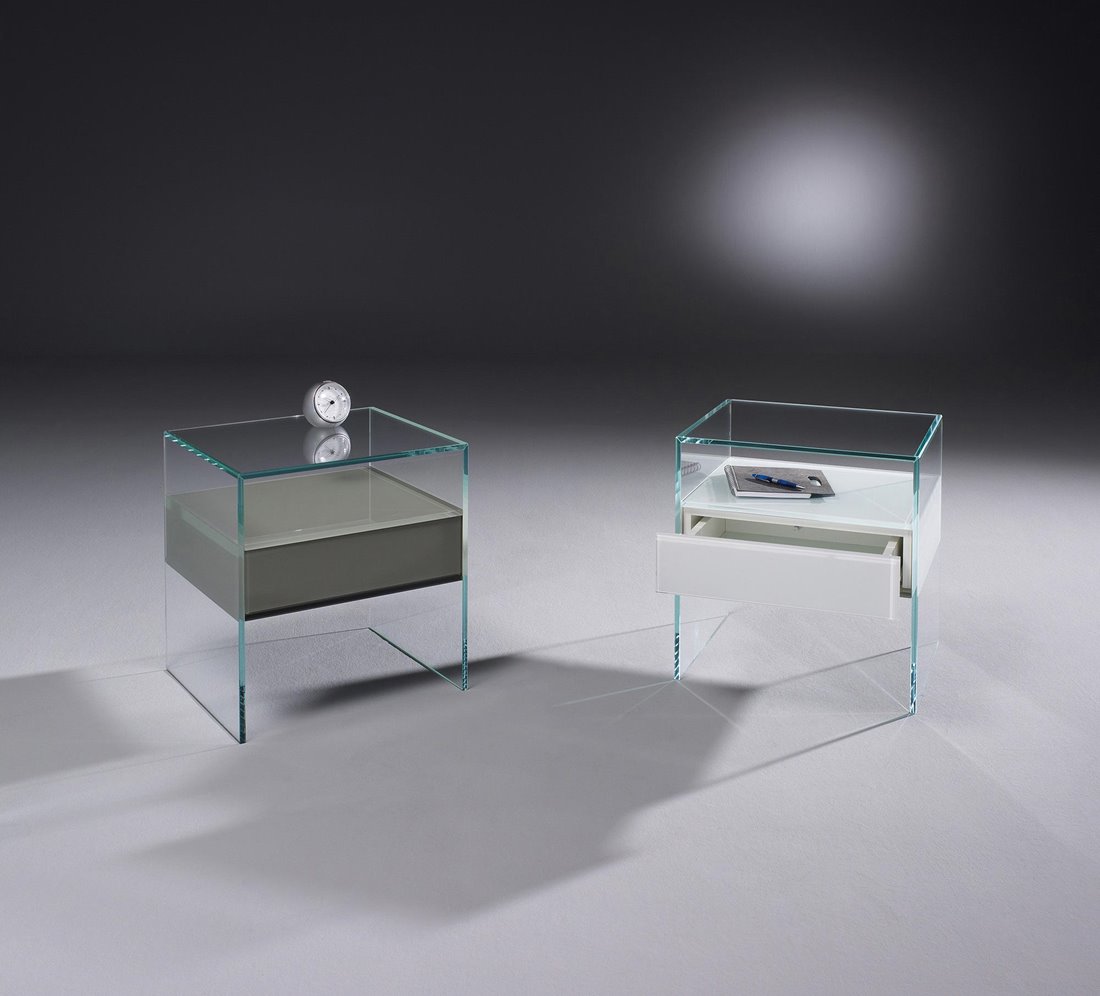
A clear bedside outline: check tabletop size and the items you want to reach.
Check the available sizes, material combinations and relevant opening or movement space against your notes before choosing a configuration.
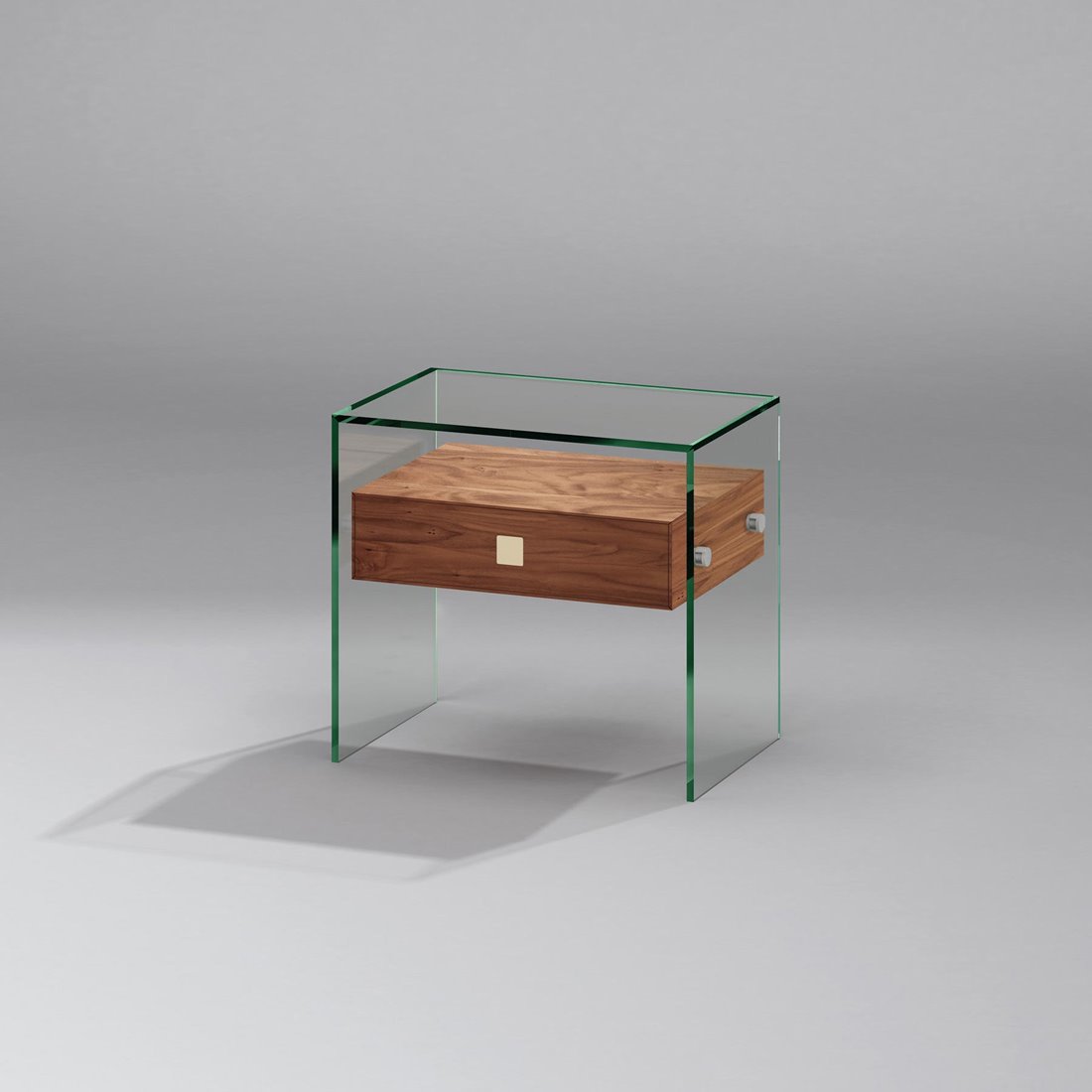
Glass and wood provide another balance of surface, grain and storage. Compare the specified versions.
Check the available sizes, material combinations and relevant opening or movement space against your notes before choosing a configuration.
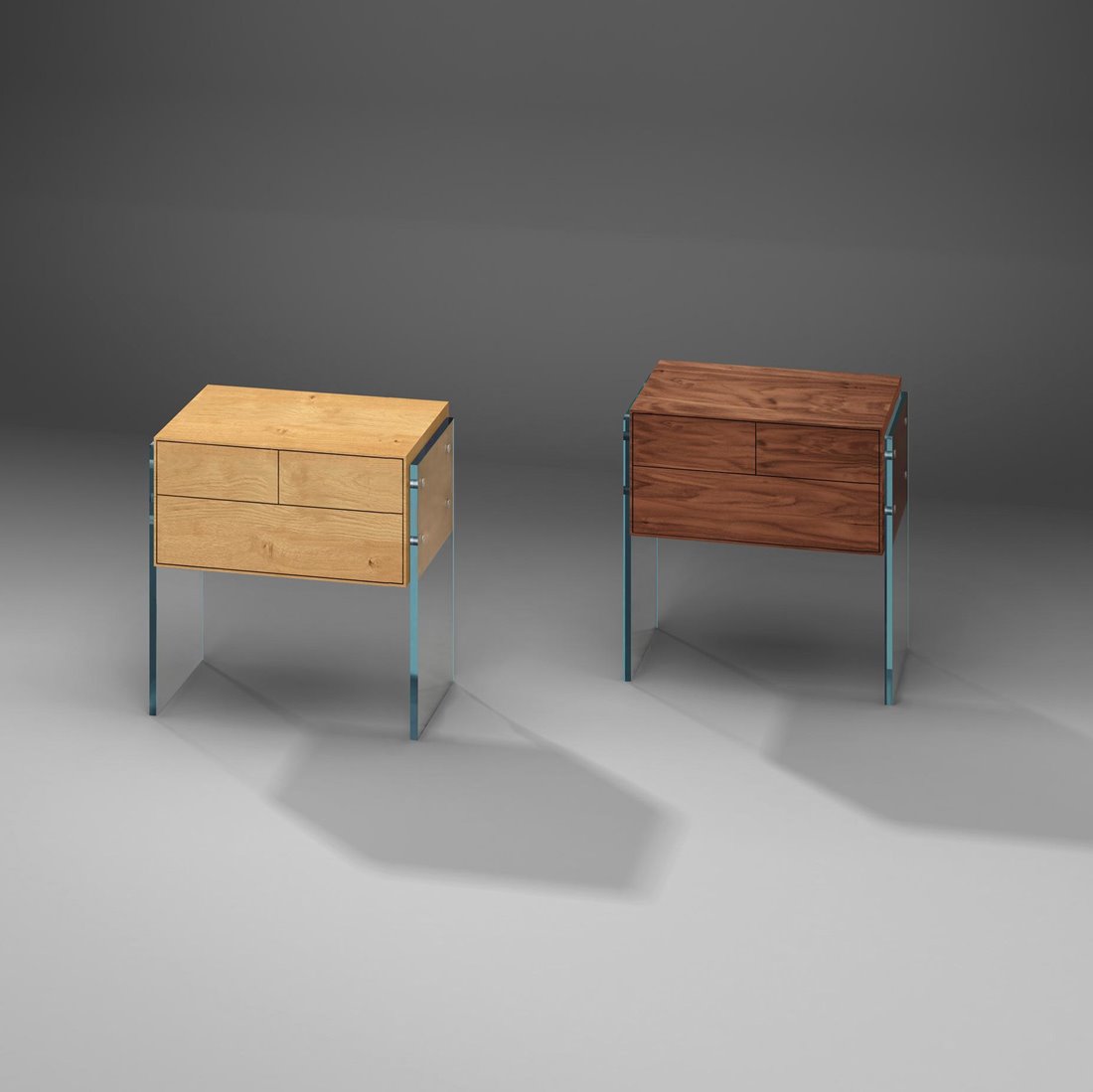
For a warmer wood presence beside the bed. Check the drawer layout and usable height.
Check the available sizes, material combinations and relevant opening or movement space against your notes before choosing a configuration.
Use these five points to turn the guide into a short furniture brief. They are worth completing before comparing a standard model with a custom design.
Mattress width alone is not the bed’s full footprint.
Nightstand height should relate to your mattress and reach.
No color choice should be sold as a guaranteed sleep benefit.
Useful answers, in one place
Open a question for a short answer and a relevant next step.
Start with a suitable bed and the storage you use, then add reachable bedside surfaces and lighting. Extra pieces should have a clear function.
Use your mattress top and normal reach as the reference. Near that level is a useful starting point, but test the exact height from the bed.
Yes. They can serve different routines while sharing a material, color or height relationship. Measure both sides independently.
Protect bed and wardrobe access and choose storage deliberately. A smaller piece is useful only if it still fits the things you need.
It can be, provided the wall, fixings and final height suit the design and use. Confirm these before ordering or installation.
Yes, we can discuss dimensions, drawer storage, glass, wood, color and original designs. Send room measurements and the mattress height as part of the brief.
If a standard size or finish does not solve the problem, we can discuss a different dimension, color or combination of glass, solid wood and metal. We also review original furniture designs. Describe the intended use, include room or object measurements and send photos of the pieces you want to keep.
Ask for personal furniture advice · Explore custom furniture
You can order available models directly in our online store. For a custom piece, we first agree the specification. Delivery arrangements depend on the destination; check the information for your country.
To compare selected models or materials in person, arrange a visit to our Hennef showroom by email or phone. Visits are by prior appointment only; please confirm the models or materials you want to see.