
Living · Planning · Understanding materials
Hallway furniture ideas: make the entrance work
A useful hallway has a clear route, a place for everyday arrivals and enough light to find what you need. Start with doors and movement before choosing a console, mirror or bench. A narrow entrance can look beautifully furnished and still be frustrating with shopping bags or a coat.
Whether you call it a hallway, entryway or entrance hall, its furniture should support your routine. Decide what belongs here every day and what can live elsewhere; the difference often saves more space than buying a smaller console.
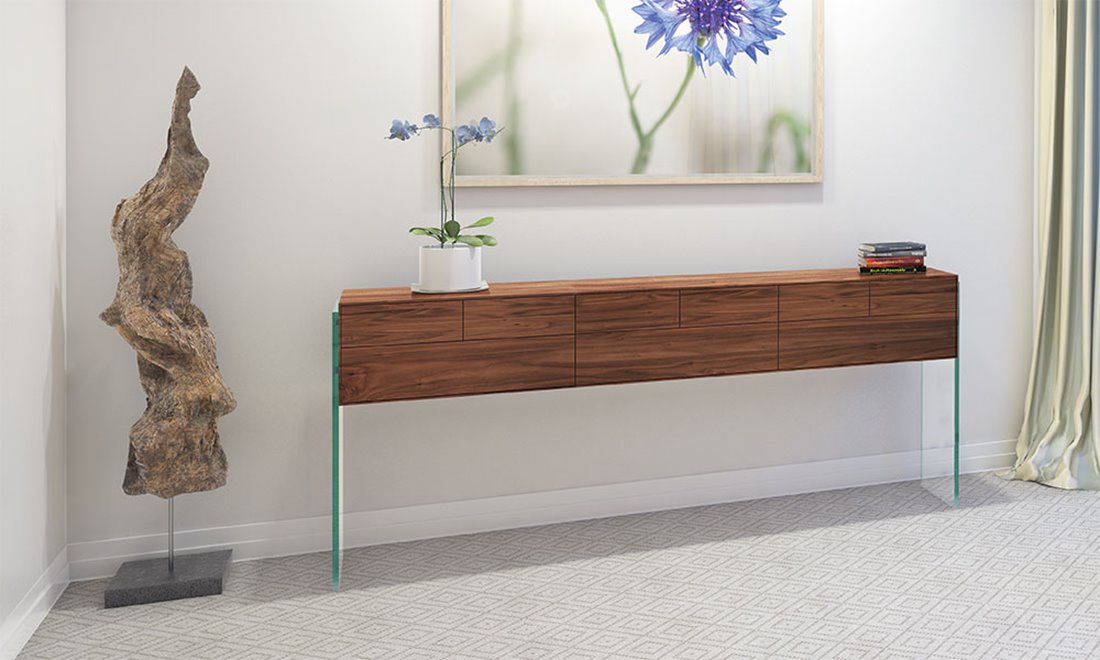
Rooms · 01
Consider everyday life before the style
List the things that arrive with you: keys, mail, bags, shoes and coats. Then distinguish permanent storage from temporary landing space. One tray for keys and a defined mail slot are more useful than a large surface that becomes the home for everything.
If several people use the entrance, assign easy-to-reach places rather than a complicated sorting system. Seasonal footwear and occasional bags can be stored elsewhere so the entrance does not have to carry the whole household.
Rooms · 02
Long, narrow and awkward hallways
Measure the narrowest point, including radiators, switches and door handles. A shallow console may preserve a route where a standard-depth chest would not. Keep its top and base outline in the plan: projecting feet can occupy more passage space than the drawer front suggests.
In a long hallway, place useful storage where it does not turn the full length into a furniture corridor. An empty stretch can be a deliberate pause. Use wall color or one artwork to connect the areas rather than adding a console to every gap.
Rooms · 03
Check doors, drawers and a place to sit
Open the front door and the nearest internal doors fully before marking furniture. Then test drawer opening and a person bending to use it. A console that fits with every door closed may fail the everyday test.
If a seat is needed for shoes, check whether it can remain outside the route. A separate stool may be easier to move than a long bench, but it still needs a proper parking place. Choose the function deliberately rather than treating seating as mandatory decoration.
Rooms · 04
Glass consoles and closed storage
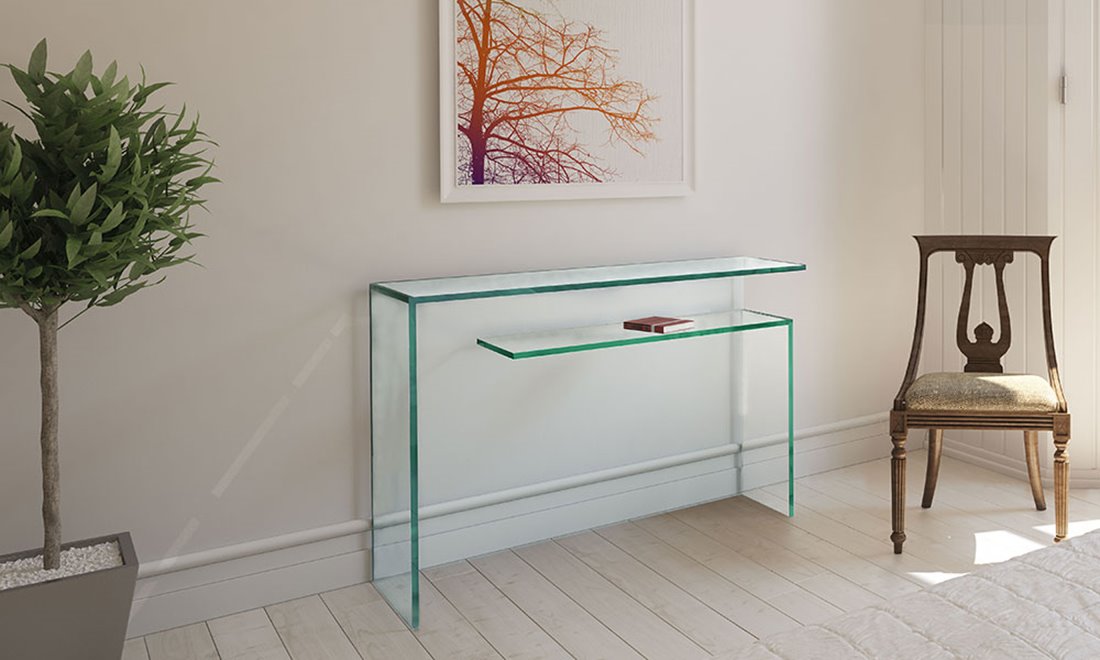
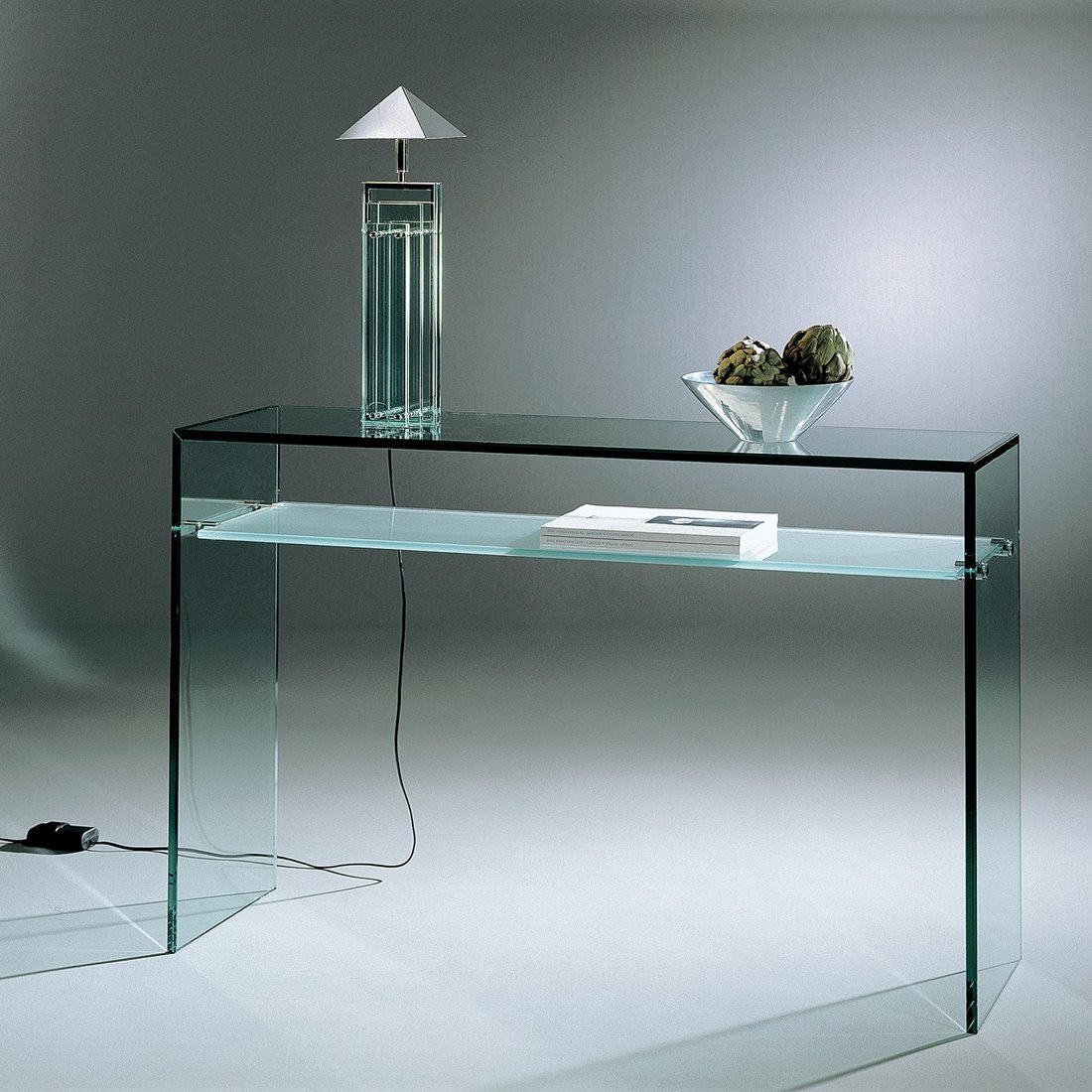
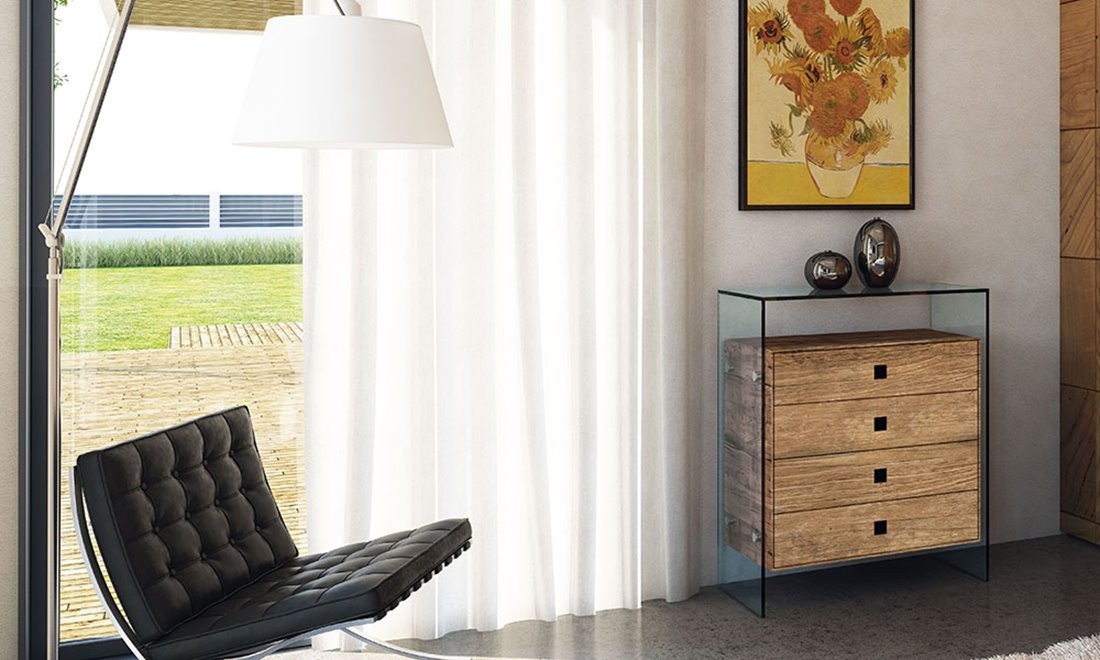
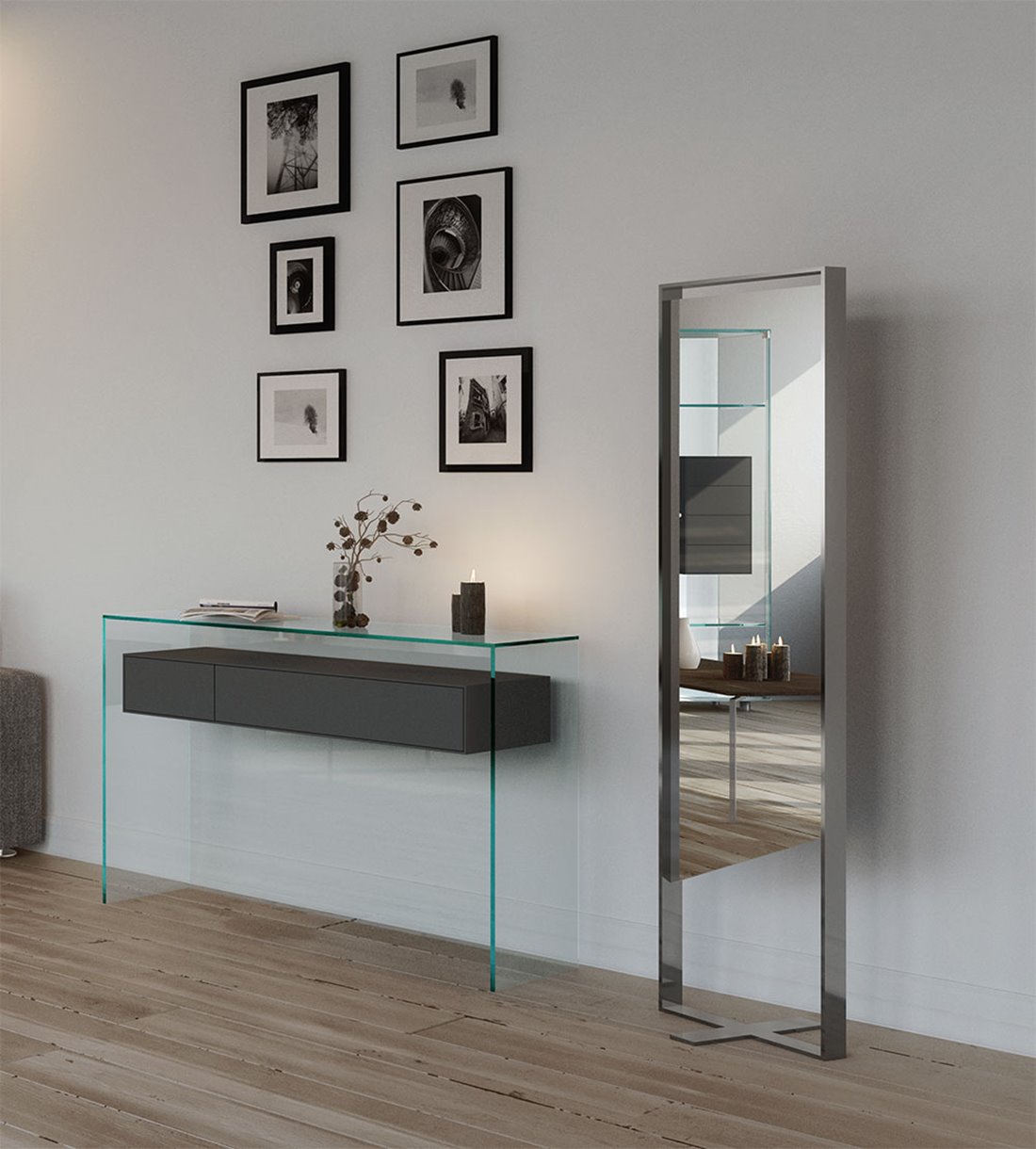
A clear glass console keeps more of the background visible. A drawer gives small arrival items a home out of sight; an open shelf can hold a useful basket if its dimensions fit. Compare the inside drawer space with the items you intend to store.
Open display and coat storage do different jobs. Do not expect a console to replace a wardrobe. If the entrance needs deeper closed storage, put it where the route can accommodate it and use a lighter surface in the narrowest area.
Rooms · 05
Mirrors, lighting and darker entrances
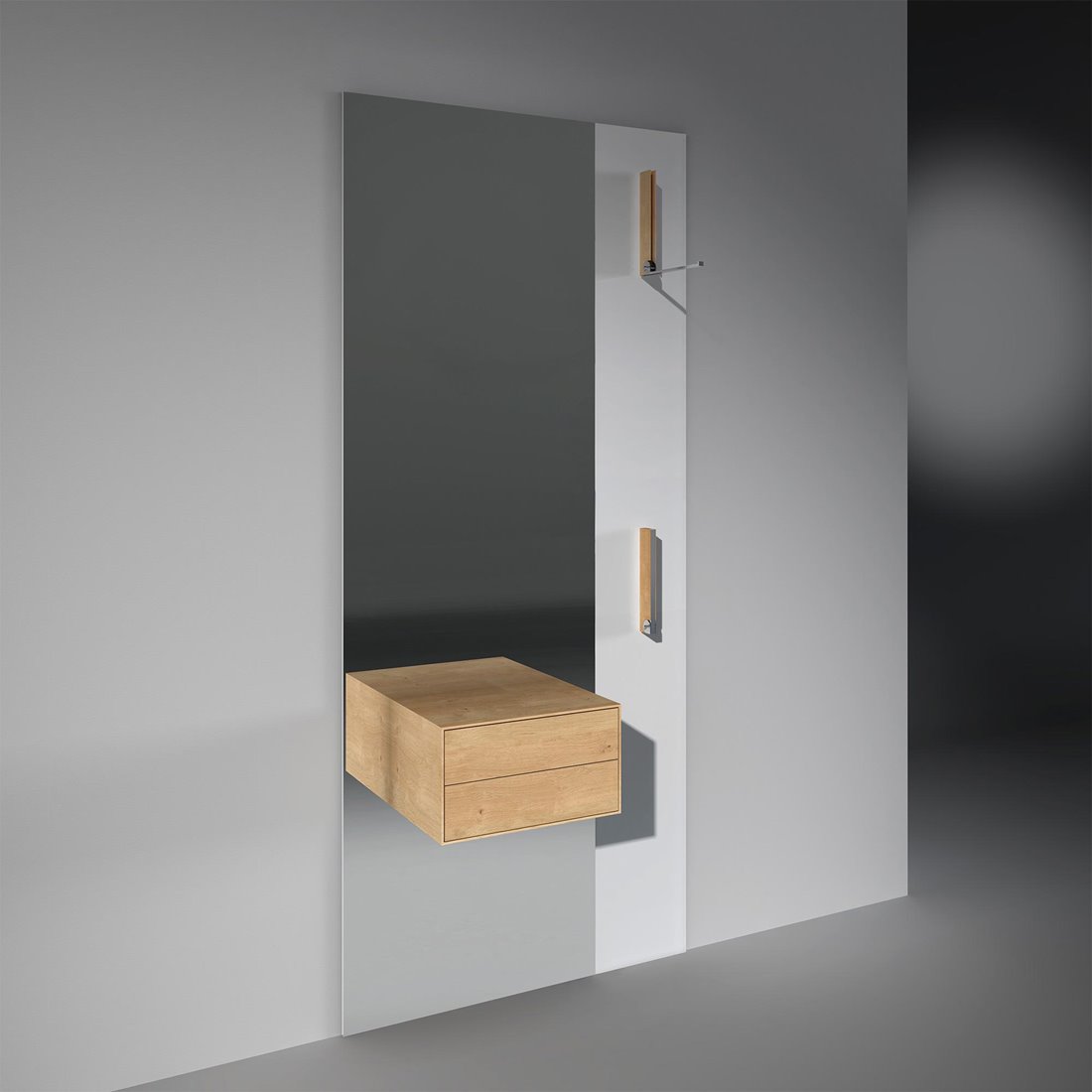
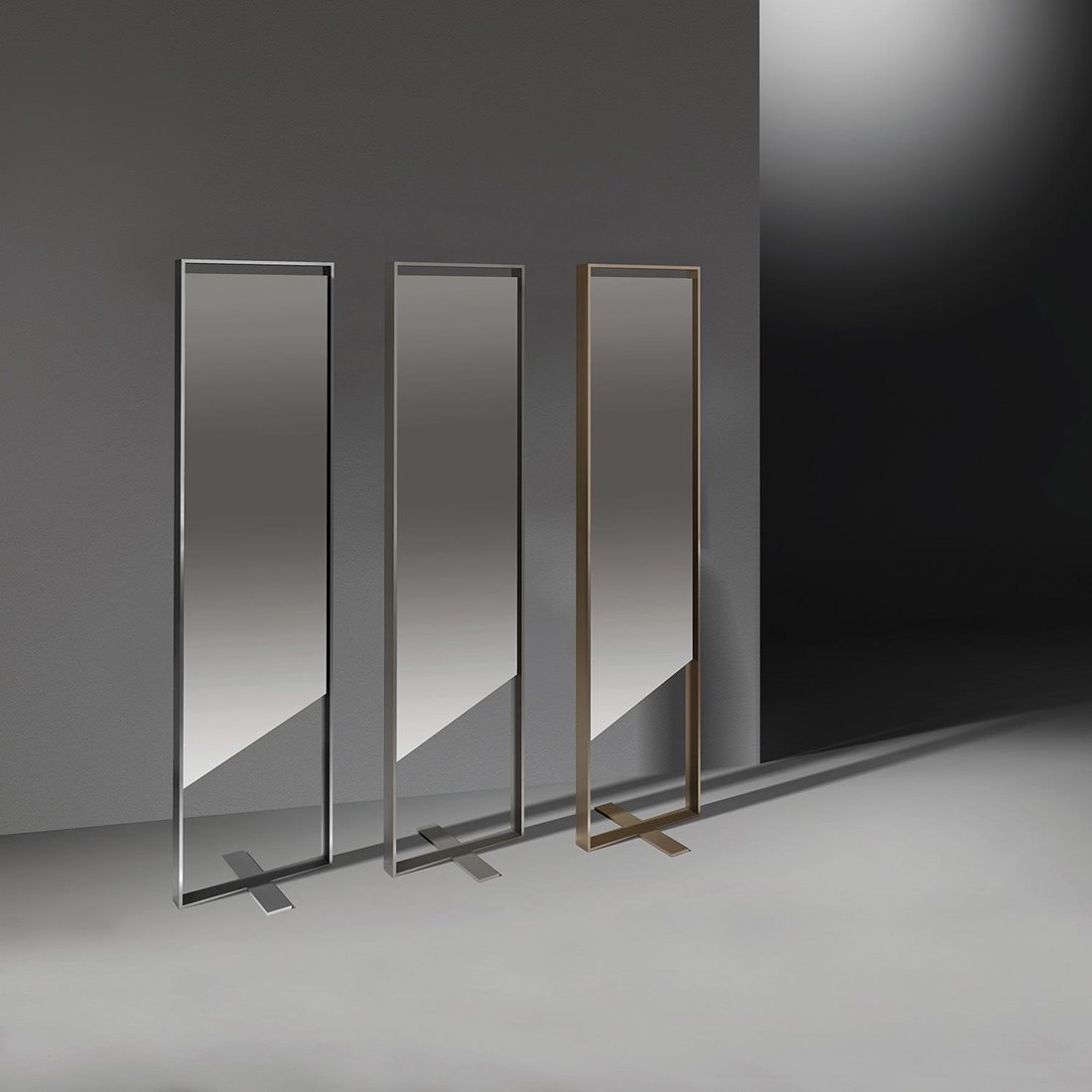
Place a mirror where you can use it without standing in a door sweep. Look at its reflection from normal eye level before fixing the position. A reflection of a window can be attractive; a reflection of an overflowing coat rail may not be the effect you want.
Use enough general light to move comfortably and a separate accent if you want to highlight a console. A lamp needs a practical cable route. Do not let a trailing lead undo an otherwise clear entrance.
Rooms · 06
Modern, country and vintage combinations
For a restrained modern entrance, combine a simple console with one strong mirror or artwork. In a warmer country-inspired setting, a wood drawer and textured accessories can connect to existing doors or flooring. A vintage piece can remain the character of the entrance while a quieter glass surface supports it.
Keep useful tabletop space free. A decorative arrangement should leave room for a bag or the objects you set down on arrival. If everything has to be moved before the surface can be used, simplify the display.
Choose by the problem you want to solve
| Your situation | What to compare | What to check |
|---|---|---|
| Narrow entrance | Compare shallow consoles first. | Include base, handles and door sweeps. |
| Many arrival items | Create defined storage close to the entrance. | Separate daily use from seasonal overflow. |
| Dark or long corridor | Use deliberate lighting and a few focal points. | Keep cables and furniture outside the passage. |
Try this before buying
A narrow-hallway depth comparison
In an illustrative 48 in (122 cm) wide hallway, a 12 in (30 cm) deep console leaves about 36 in (92 cm) before allowing for baseboards and other projections. A 16 in (41 cm) piece leaves only about 32 in (81 cm). These calculations compare furniture depth; they are not an accessibility or building-code approval. Test your actual route and doors.
- Measure the narrowest point
- Include feet and handles
- Open doors and drawers
- Try arriving with a bag
Record the version that works and keep the measurements with your photographs. If you change one item, repeat the relevant test: a different depth, finish or opening direction can affect more than its immediate position. Compare the complete arrangement with the way you actually use the room.
From the plan to a particular piece
Furniture examples from DREIECK DESIGN
These examples show different ways to address the decisions above. Compare the selected dimensions, finish and construction on the product page; photographs may show a particular version rather than every available option.
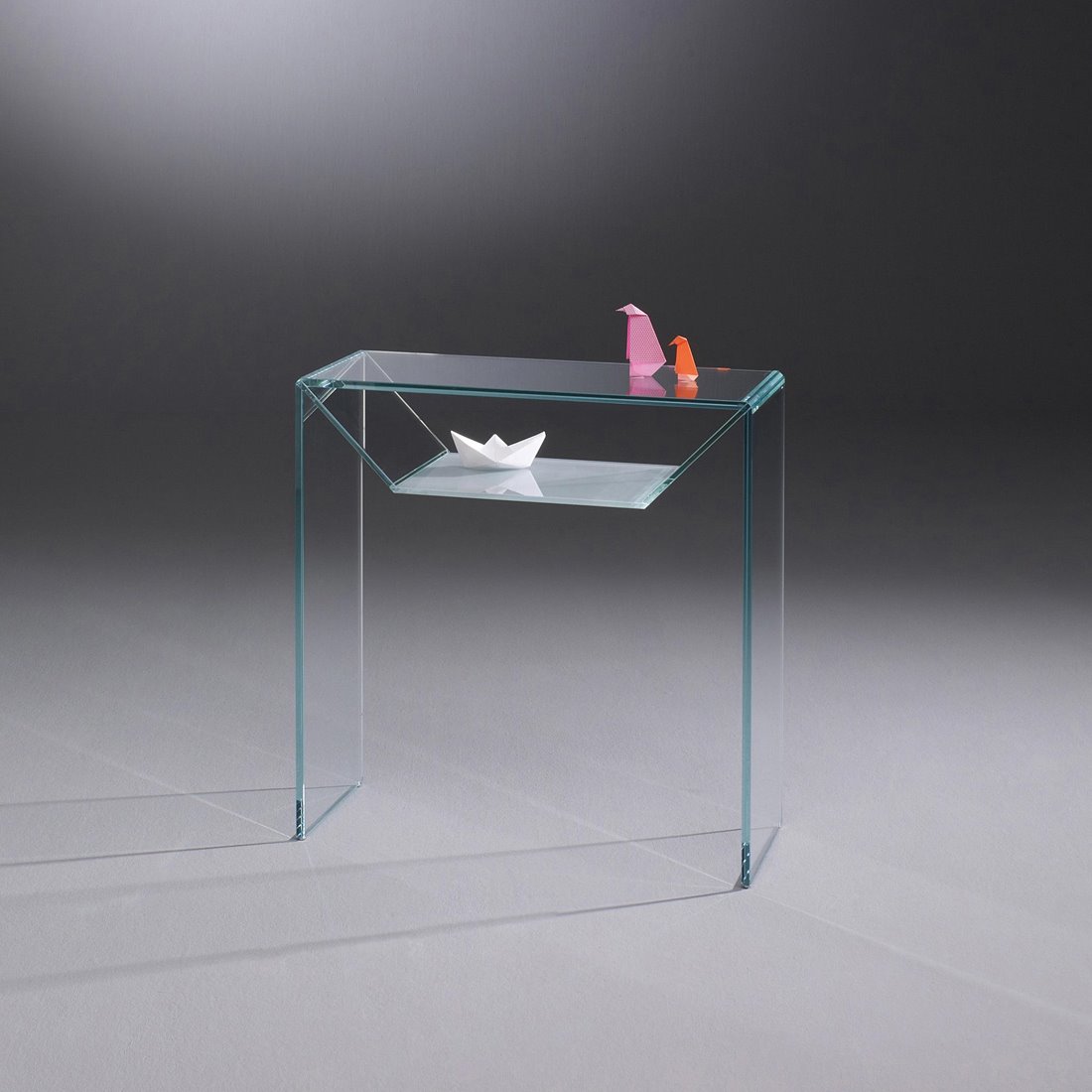
BRIDGE
Its listed 30 cm depth is worth comparing in a narrower hall; include the whole construction in the measurement.
Check the available sizes, material combinations and relevant opening or movement space against your notes before choosing a configuration.
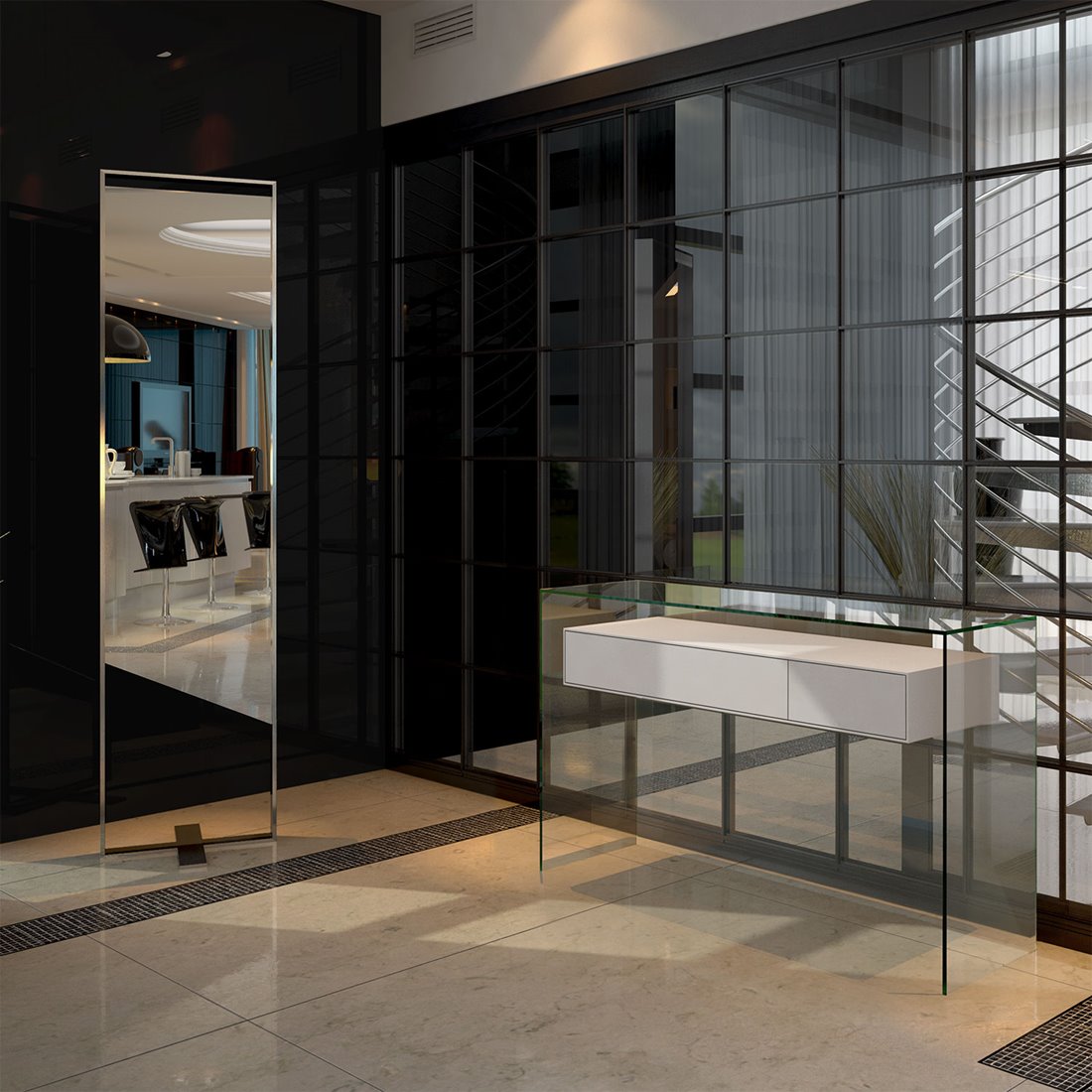
FLY
For an arrival surface with drawers. Check the available versions and usable storage dimensions.
Check the available sizes, material combinations and relevant opening or movement space against your notes before choosing a configuration.
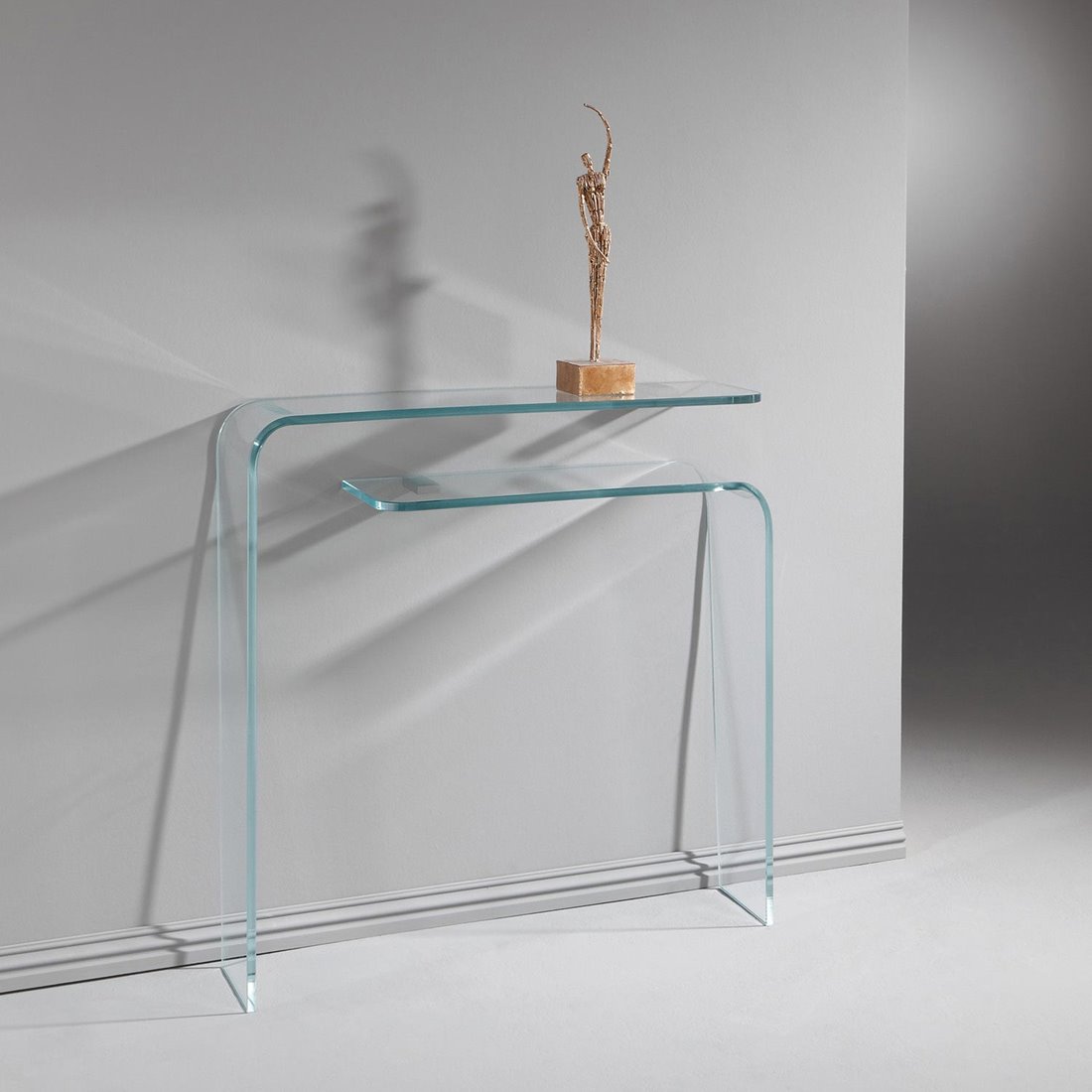
L SOFT
A listed 24 cm depth and wall mounting offer a different arrangement; confirm the wall and fixing requirements.
Check the available sizes, material combinations and relevant opening or movement space against your notes before choosing a configuration.
Your checklist before choosing
Use these five points to turn the guide into a short furniture brief. They are worth completing before comparing a standard model with a custom design.
- Clear route and all door sweeps.
- Keys, mail and other arrival items assigned a home.
- Console depth including supports and drawer movement.
- Mirror position and a safe lamp cable route.
- Wall suitability for any mounted furniture.
Three mistakes worth avoiding
A console can fit the wall while obstructing an open door.
A large decorative display may remove the landing space you wanted.
A wall-mounted design still needs suitable construction and fixings.
Useful answers, in one place
Questions and answers
Open a question for a short answer and a relevant next step.
What furniture should I put in a narrow hallway?
Begin with a shallow useful surface or storage piece outside the door sweeps. Measure the narrowest usable width and compare the full depth of the furniture.
How do I keep the entryway tidy?
Give recurring items a small, defined place and store occasional items elsewhere. A drawer can help, but the system should be easy to use when arriving home.
Where should a hallway mirror go?
Place it where you can use it without blocking a door and where its reflection is useful. Test the view before choosing the final mounting position.
Does an entryway need a bench?
Only if you use it and the space can accommodate it outside the route. A movable seat may be another option, provided it has a designated place.
Can glass furniture suit a dark hallway?
A clear outline can keep the arrangement visually lighter. Plan lighting and the real furniture depth as well; transparency does not create additional passage space.
Can I order a shallow custom console?
Yes, discuss depth, width, storage and the intended location with us. We can review a suitable custom glass, wood and metal construction.
Continue with the question that comes next
Bring your measurements and ideas
If a standard size or finish does not solve the problem, we can discuss a different dimension, color or combination of glass, solid wood and metal. We also review original furniture designs. Describe the intended use, include room or object measurements and send photos of the pieces you want to keep.
Ask for personal furniture advice · Explore custom furniture
You can order available models directly in our online store. For a custom piece, we first agree the specification. Delivery arrangements depend on the destination; check the information for your country.
To compare selected models or materials in person, arrange a visit to our Hennef showroom by email or phone. Visits are by prior appointment only; please confirm the models or materials you want to see.